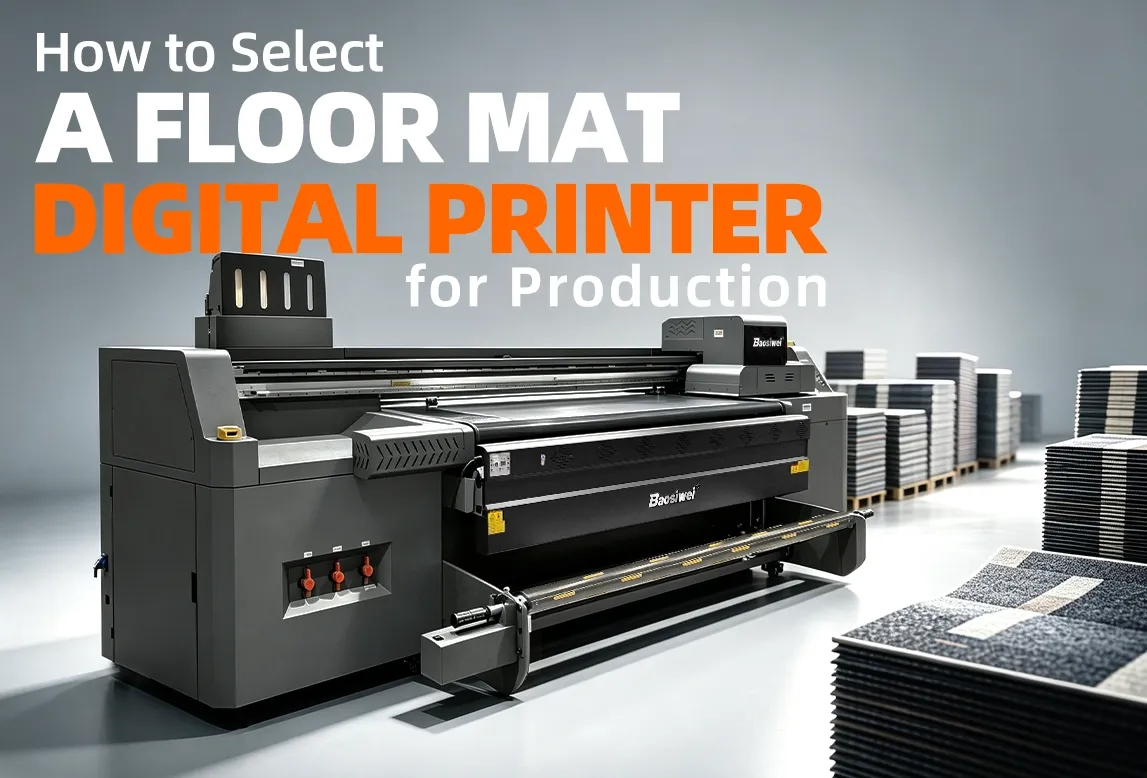
How to Select a Floor Mat Digital Printer for Production
How to Select a Floor Mat Digital Printer for Production
Summary
Choosing a floor mat digital printer involves more than comparing print speed and machine price. The right equipment depends on the mat material, sheet or roll format, order volume, factory conditions, and production requirements.
Before purchasing, test your actual mat materials and artwork to verify print quality, ink adhesion, durability, and production stability.
The selection process can be summarized as:
Material & Application → Sheet or Roll → Order Volume → Printer Type → Factory Conditions → Material Testing → Final Configuration
This guide explains how to evaluate floor mat printing equipment for real production.
1. Choose the Printer Based on Mat Material and Application
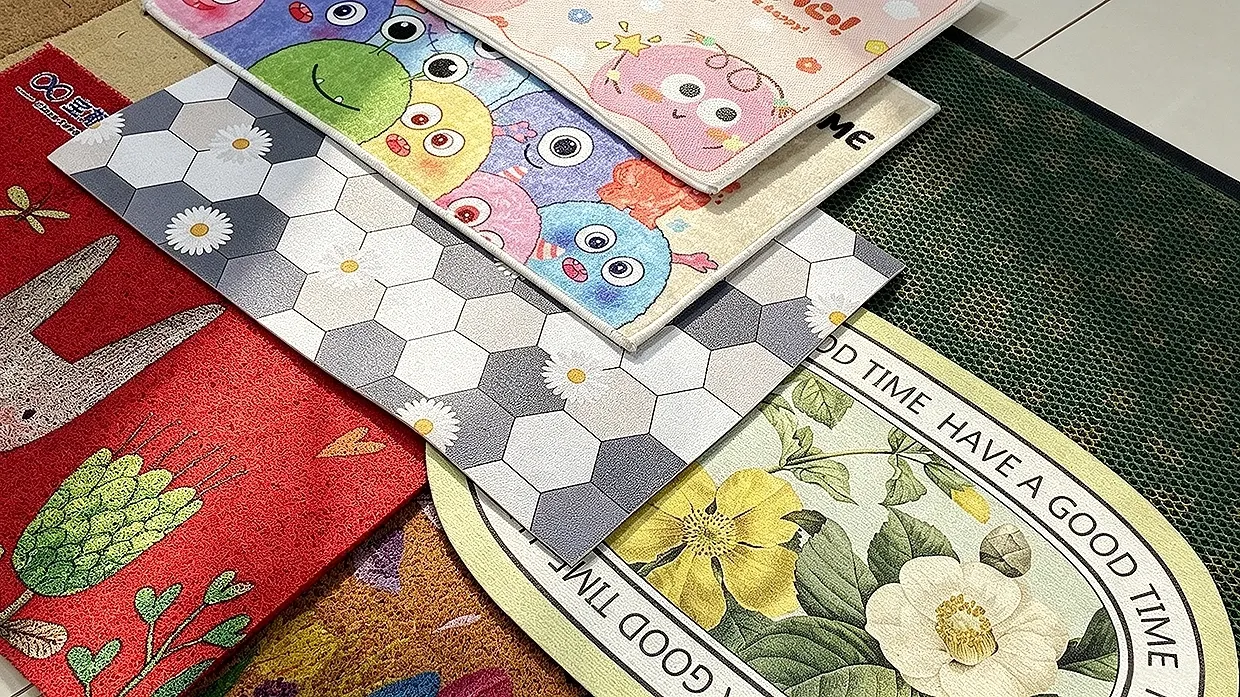
The mat material is the first factor to consider when selecting a floor mat digital printer.
Common materials include:
- PVC
- Rubber
- Coir
- Polyester
- Nylon
Different materials have different surface structures, absorbency, and ink adhesion requirements.
For textile mats, focus on ink penetration, color coverage, and fixation. For PVC, rubber, and other non-porous materials, ink adhesion is especially important.
For more information about different floor mat printing technologies, see our guide to Guide to Floor Mat Materials and Baosiwei Digital Printing Applications
Indoor mats are commonly used in bathrooms, bedrooms, kitchens, and entrances. Key considerations include:
- Color and image quality
- Odor
- Surface feel
- Color stability after daily use
- Cleaning resistance
Outdoor and commercial entrance mats face more friction, moisture, and weather exposure, so abrasion, water, and weather resistance should be tested more carefully.
2. Choose the Printing Process Based on Sheet or Roll Material
After confirming the material, determine whether you will print pre-cut sheets or continuous rolls.
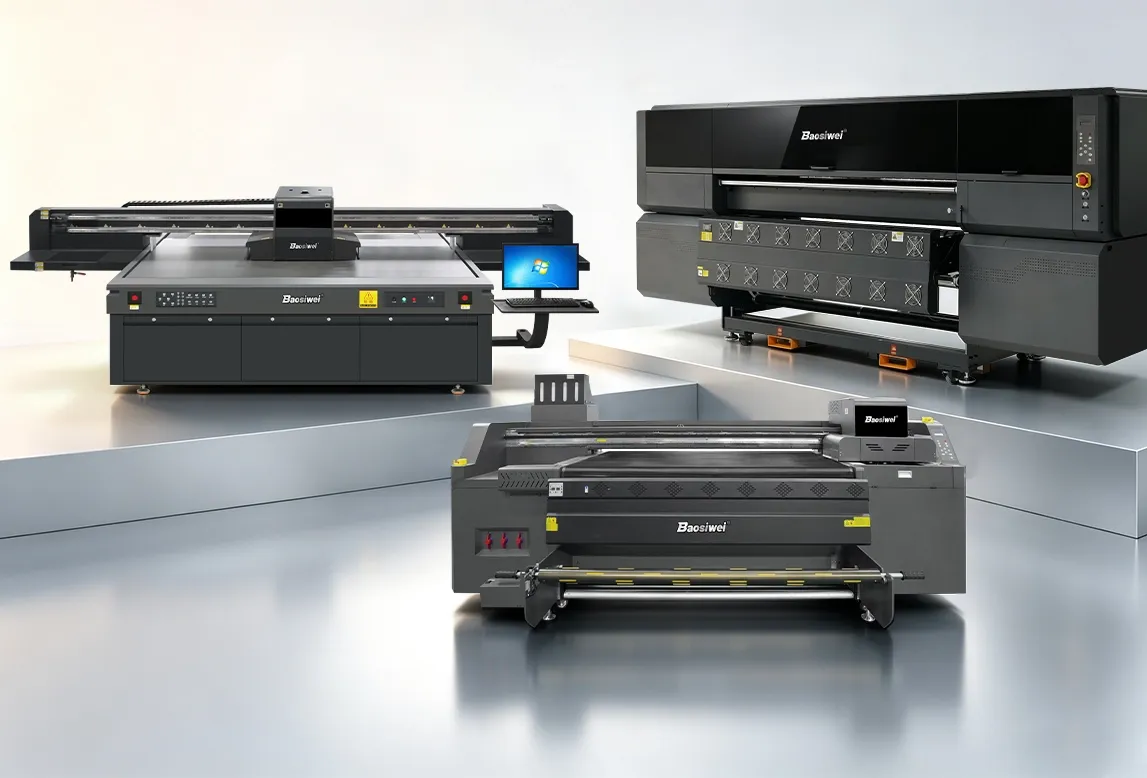
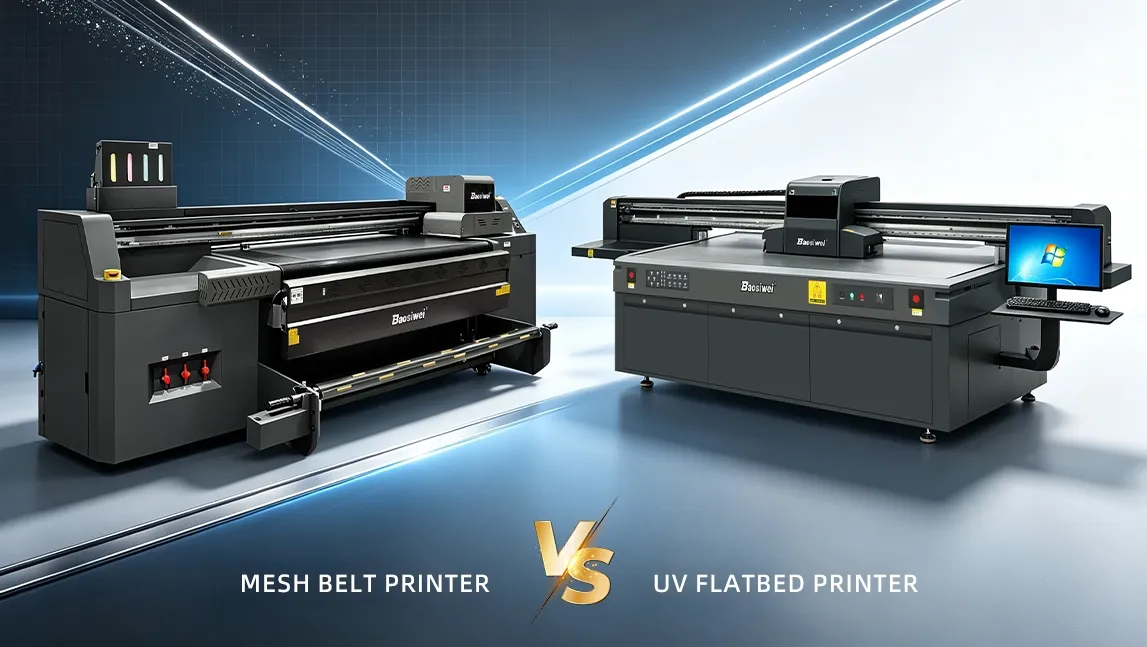
Sheet Printing: UV Flatbed Printers
For fixed-size, pre-cut mats, a UV flatbed printer can be a practical option.
The mat is placed directly on the flatbed for positioning and printing, making this workflow suitable for customized products with different sizes and designs.
When evaluating a UV flatbed, check:
- Usable print width
- Material positioning
- Printhead height adjustment
- Printhead protection
- Compatibility with textured or uneven surfaces
UV flatbed printing also provides immediate curing, which can shorten waiting time before further handling.
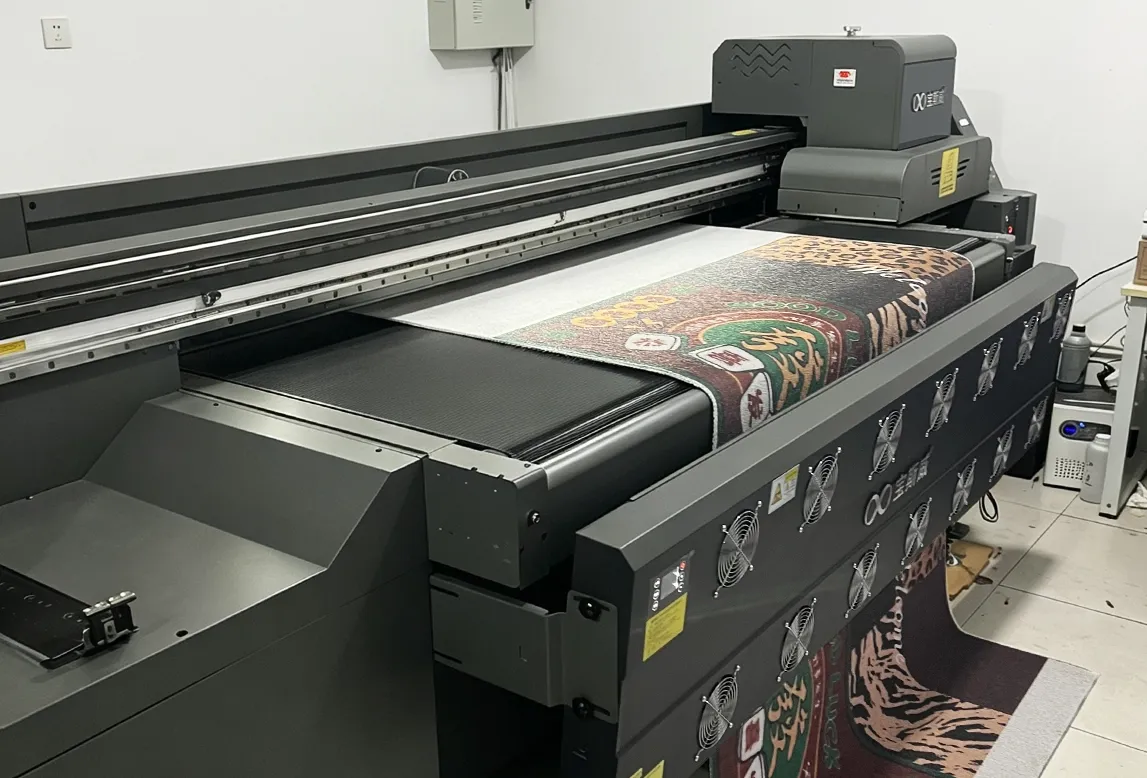
Roll Printing: UV/Weak-Solvent Belt Printing or Dye Sublimation
For continuous roll materials, production efficiency becomes more important.
Depending on the substrate, consider a UV/ECO-solvent Hybrid printing system or dye sublimation printing.
For industrial roll production, check:
- Material feeding stability
- Belt transport accuracy
- Take-up capacity
- Material tension
- Wrinkle control
- Long-run stability
For polyester-based mats requiring full-color graphics and frequent foot traffic, dye sublimation can be considered. It requires a complete workflow with transfer printing and heat fixation equipment rather than a printer alone.
3. Select the Equipment According to Order Volume
Before purchasing a digital printer for floor mats, evaluate your actual production requirements:
- Daily quantity or square meters
- Common mat sizes
- Sampling versus batch production
- Daily operating hours
- Single- or multi-shift production
Small-Batch Production
For customized orders, samples, workshops, and startups, a smaller UV flatbed printer can provide a lower initial investment and enough flexibility for changing orders.
Continuous Production
For stable orders and long operating hours, industrial equipment should be evaluated more carefully.
Key factors include:
- Equipment manufacturing capability
- Continuous-operation stability
- Printhead and ink system configuration
- Maintenance requirements
- After-sales service
For production use, actual long-run performance is more important than maximum speed shown on a specification sheet.
4. Check Factory Conditions Before Installation
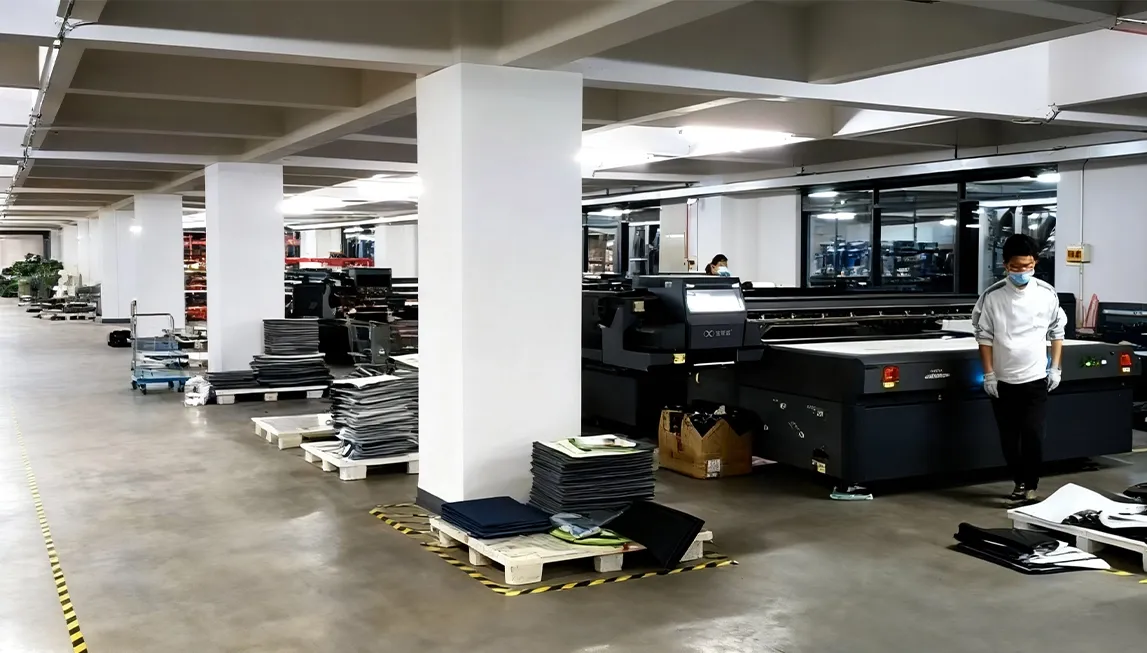
Before purchasing a floor mat printing machine, confirm:
- Power supply
- Machine weight and floor conditions
- Workshop temperature and humidity
- Air conditioning or humidification requirements
- Computer configuration
- Material storage
- Loading and unloading areas
- Maintenance space
UV/weak-solvent belt systems and dye sublimation workflows also require space for material feeding and subsequent processing.
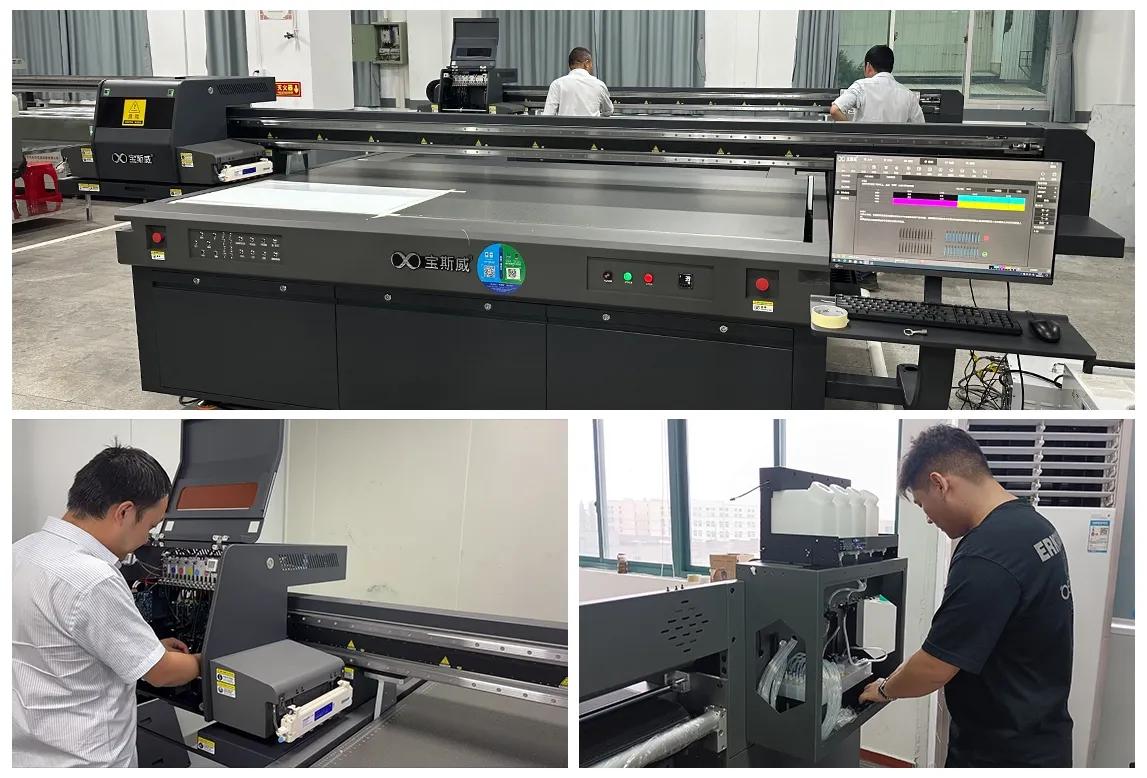
Operators should be familiar with RIP software, print parameters, color management, ink handling, and routine printhead maintenance.
Baosiwei can provide factory layout recommendations, machine operation training, and production training. Customers can also receive online technical and maintenance support after installation.
For long-hour or multi-shift production, equipment, factory conditions, operators, and technical support should be planned together.
5. Test Your Actual Mat Materials Before Buying
Before purchasing a floor mat digital printer, test the materials you actually use with your own artwork and product sizes.
Color Performance
Check:
- CMYK reproduction
- Gradients
- Fine details
- Dark areas
- White-ink or underbase requirements where applicable
Ink Adhesion and Durability
Depending on the application, test:
- Ink adhesion
- Abrasion resistance
- Cleaning resistance
- Water resistance
Entrance and commercial mats require particular attention because of frequent foot traffic and friction.
Material Compatibility
Test different surfaces such as:
- Loop-pile mats
- Tufted mats
- Coir mats
- Short-pile textiles
- PVC surfaces
Check ink penetration, coverage, image clarity, and the final surface appearance.
Continuous Production Stability
For industrial production, also run continuous tests to evaluate:
- Material feeding
- Print accuracy
- Printhead condition
- Image consistency
- Machine stability
One sample can show the print result. A complete test can show whether the material, ink, and equipment are suitable for real production.
6. How Does Baosiwei Evaluate Floor Mat Printing Solutions?
Baosiwei has completed testing on more than 1,000 types of floor mat materials and worked on approximately 300 floor mat-related customers and projects.
Applications cover Europe and the United States, South America, Central Asia, and Southeast Asia, with more than 800 floor mat printing machines now operating in customer factories.
These projects involve different materials, sizes, surface structures, and production requirements.
Baosiwei evaluates each project based on:
- Mat material
- Product size
- Application environment
- Sheet or roll format
- Order volume
- Required production capacity
Depending on the requirements, the printing process may use UV flatbed printing, UV/Eco-solvent hybrid printing, or dye sublimation printing.
For higher-volume projects, continuous printing tests are also conducted to evaluate material feeding, print quality, and machine stability.
The equipment selection process is:
Material Testing → Printing Process → Machine Structure → Production Capacity
If you are planning to invest in floor mat printing equipment, you can send your actual mat material to Baosiwei for testing. The results can then be used to evaluate the suitable printing technology and equipment configuration for your production needs.
Conclusion
Selecting a floor mat digital printer should start with your actual product and production requirements.
Material, application, sheet or roll format, order volume, factory conditions, and production stability all affect the equipment choice.
Testing your own materials before purchase is the most practical way to verify print quality, ink adhesion, durability, and production performance.
If you are evaluating a digital printer for floor mats, contact Baosiwei with your material, mat size, artwork, and expected production volume. We can test the material and evaluate a suitable printing solution based on your production requirements.
Email: [email protected]