
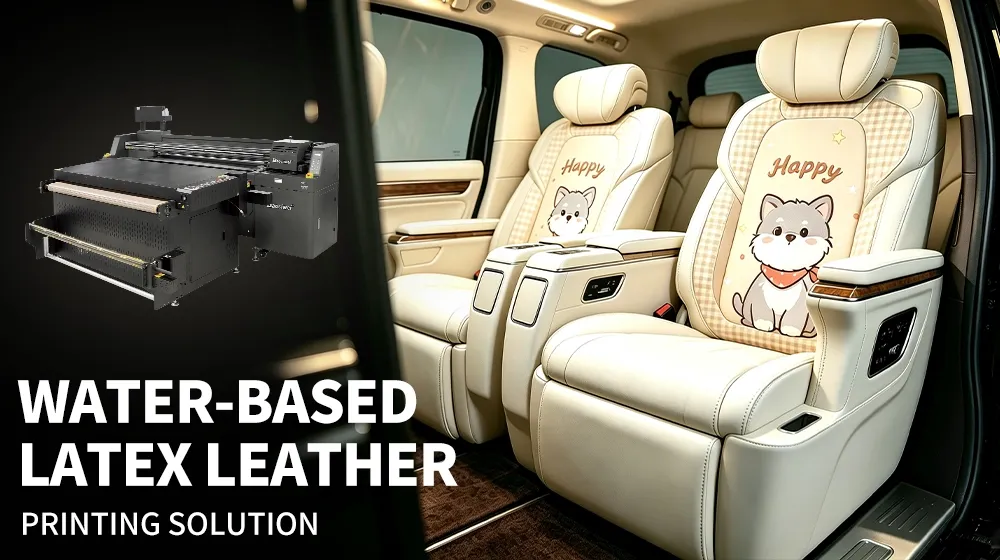
Water-Based Latex Leather Printing Solution for Automotive Interiors
Water-Based Latex Leather Printing Solution for Automotive Interiors
Automotive interior and floor mat manufacturers are handling more customized designs while facing stricter expectations around environmental performance and material safety.
Traditional leather printing relies on plate making, which becomes less flexible when designs change frequently or order quantities are small. UV digital printing removes the need for plates, but for flexible leather applications, factors such as odor, surface feel and print durability after repeated bending still need to be considered.
Baosiwei has developed a water-based latex leather printing solution based on the JW-1905A1 latex digital printer and Baosiwei self-developed water-based latex ink. The solution can be used for automotive seats, car floor mats, door panels and other leather or synthetic leather products, combining low-emission printing, detailed pattern reproduction, flexibility and small-batch production.
Why Is Digital Printing Becoming More Relevant for Leather Customization?
Leather production is becoming more diverse. A single factory may need to handle different vehicle models, patterns and order quantities at the same time.
A traditional printing workflow usually involves:
Design → Plate Making → Setup → Printing
When a customer only needs samples or requests a new pattern, plate making adds another preparation step to the order.
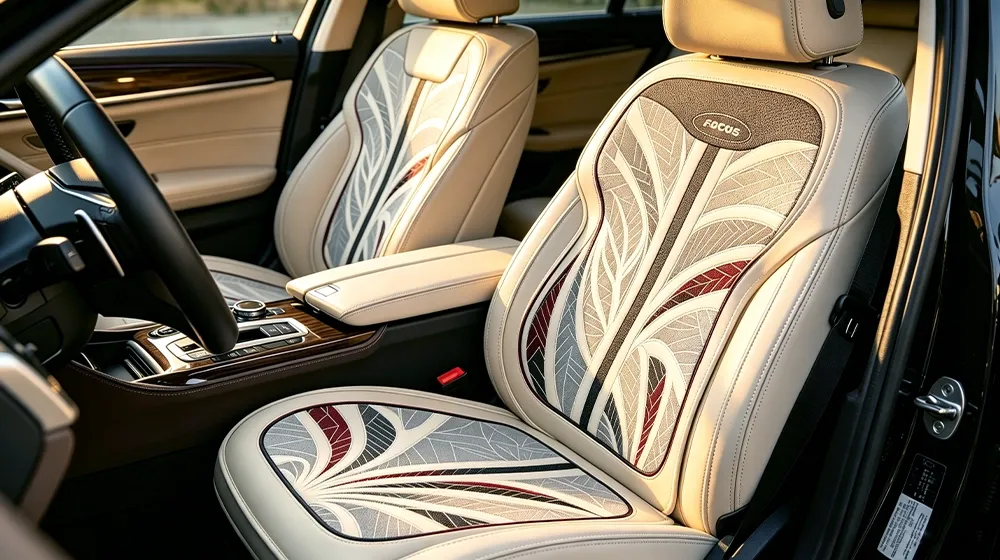
Digital printing works differently. Artwork can be sent directly to the printer without making a new plate for every design. Gradients, detailed patterns, logos, fine lines and customized graphics can be reproduced directly from digital files.
For automotive interior and floor mat manufacturers, this flexibility is useful for sample development, small-batch customization and multi-design production.
Water-Based Latex Printing for Environmental and Leather Application Requirements
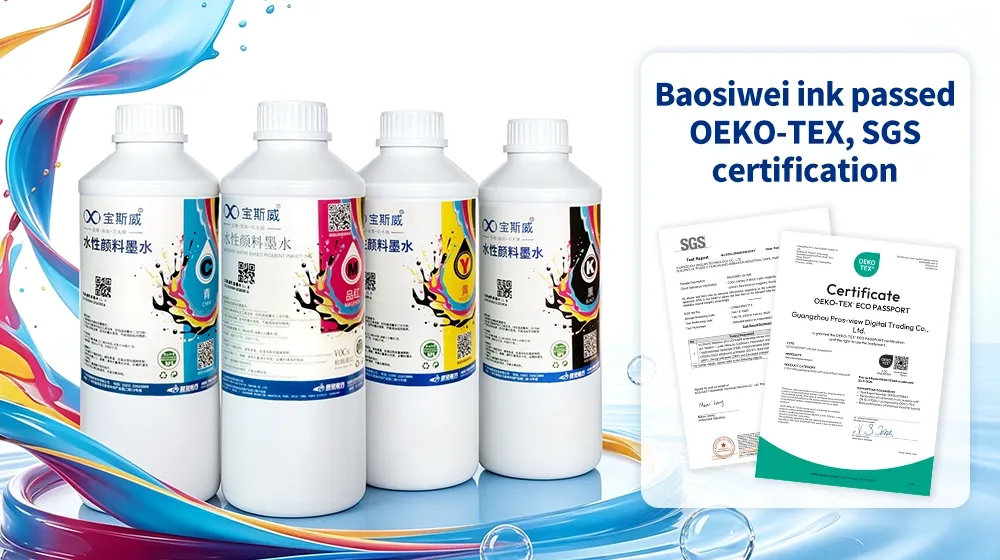
The Baosiwei JW-1905A1 uses Baosiwei self-developed water-based latex ink. Based on Baosiwei's ink test results, the ink system has zero VOC emissions and produces no obvious irritating odor during normal printing.
The ink has passed relevant OEKO-TEX and SGS testing, providing supporting test documentation for customers with environmental and safety requirements. The exact scope of each certification should be confirmed against the corresponding test report.
Environmental performance is only one part of leather printing. The printed surface also needs to work with the original characteristics of the material.
The Baosiwei latex printing process is designed to retain the original texture and tactile feel of leather while reproducing the required graphics. This is particularly relevant for automotive seats, floor mats and other products where both appearance and surface feel matter.
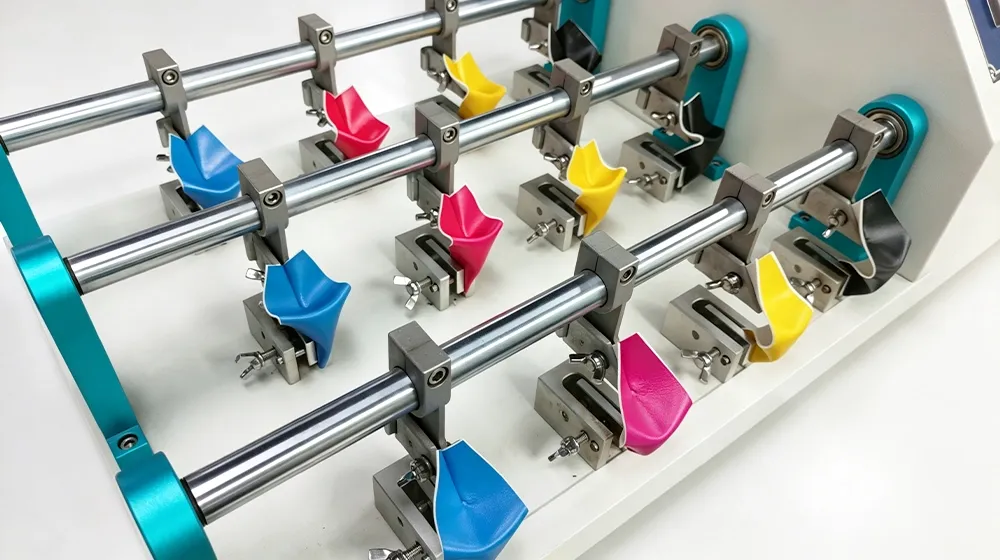
100,000-Cycle Flexing Test for Printed Leather
Automotive seats, floor mats and other flexible interior products are exposed to repeated bending during use. They may also experience sunlight and temperature changes.
For this reason, print quality alone does not provide a complete picture of a leather printing solution. The printed layer also needs to maintain its integrity when the material is repeatedly flexed.
In Baosiwei's internal flexing test, the printed leather remained intact after 100,000 bending cycles, demonstrating good resistance to repeated bending under the tested conditions.
Under Baosiwei's tested low-temperature conditions, the printed pattern showed no obvious cracking. The printed surface also demonstrated good resistance to acid and alkali under tested conditions.
The solution also provides good resistance to sunlight exposure, helping maintain the appearance of printed patterns during normal use. Since specific lightfastness grades depend on the testing standard and conditions, Baosiwei does not claim a specific grade without corresponding standardized test results.
For projects with defined durability or lightfastness requirements, customers can provide their actual leather or synthetic leather for application-specific testing.
More Than Automotive Seats: Applications for Latex Leather Printing
Water-based latex leather printing is not limited to automotive seats. Depending on the material structure and end-use requirements, the process can also be evaluated for a range of automotive interior and flexible leather products.
Automotive Seats
Digital printing can be used to reproduce customized textures, decorative graphics and brand elements on suitable leather and synthetic leather.
When different vehicle models require different designs, digital files can be changed without preparing a new printing plate.
Car Floor Mats
Car floor mats are another potential application for water-based latex digital printing.
Manufacturers can add:
- Custom patterns
- Brand logos
- Decorative graphics
- Personalized designs
- Different visual collections
For aftermarket and customized floor mat manufacturers, the ability to handle multiple designs and smaller production runs can be particularly useful.
Door Panels and Interior Trim
Leather and synthetic leather used for door panels and other decorative interior components can be evaluated for latex digital printing according to their surface characteristics.
The ability to change digital artwork without plate making provides more flexibility when developing different interior designs.
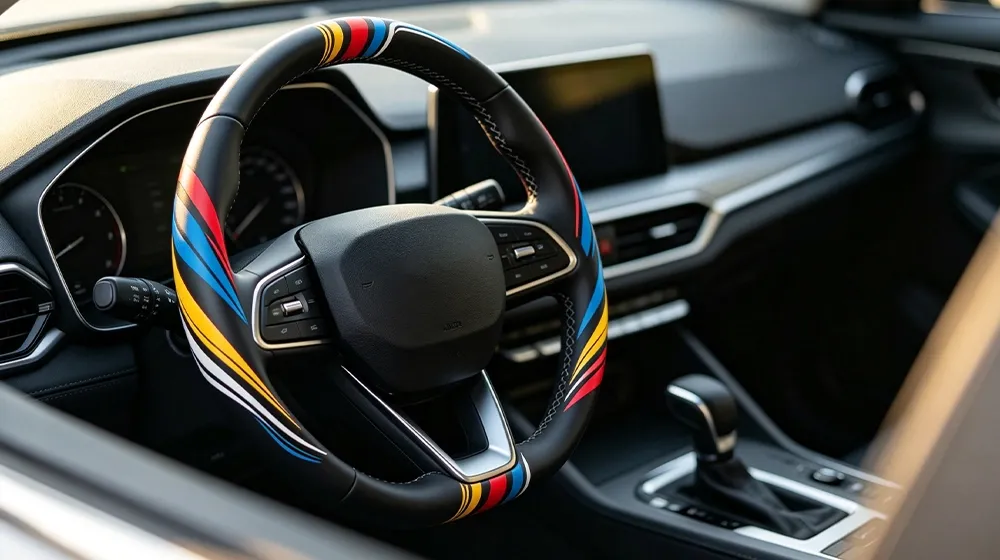
Steering Wheel Covers and Other Flexible Products
Other flexible leather products can also be evaluated when their material structure and end-use requirements are compatible with the printing process.
Before production, Baosiwei recommends testing the customer's actual material to evaluate ink adhesion, flexibility and surface appearance.
Start Printing From 1 Meter for Small-Batch Production
For conventional printing, the challenge with a small order is not always whether it can be produced. The issue is whether the preparation work is justified by the order size.
Under suitable application conditions, the Baosiwei water-based latex printing solution can start printing from 1 meter of material.
A typical workflow is:
Material Preparation → JW-1905A1 Digital Printing → Drying / Ink Fixation → Cutting → Sewing
When the design changes, the digital artwork can simply be replaced. There is no need to make a new traditional printing plate.
This makes the process suitable for customized automotive interiors, sample development, limited production runs and small-batch orders.
Actual production costs still depend on material, ink consumption, printing efficiency, labor and finishing. Digital printing does not automatically make every small order more profitable, but it can reduce some of the preparation involved in traditional plate-based production.
Baosiwei JW-1905A1: Printer, Ink and Material Testing
Leather printing is not simply a matter of selecting a printer. Different leather and synthetic leather materials can have different surface structures, coatings and ink absorption characteristics.
The final result needs to be evaluated on the actual production material.
Baosiwei provides:
- JW-1905A1 water-based latex digital printer
- Baosiwei self-developed water-based latex ink
- Actual material sample testing
- Color management and print parameter support
- Application process development
- Production technical support
Customers can provide their actual leather, synthetic leather or floor mat materials for testing. The evaluation can cover color reproduction, fine details, ink adhesion, flexibility, surface appearance, sunlight resistance, acid and alkali resistance and low-temperature performance.
The solution has already been applied in multiple commercial projects involving leather and automotive-related applications. Due to customer confidentiality agreements, specific customer names and project details cannot be publicly disclosed.
Where permitted, Baosiwei can provide relevant printed samples and test results to customers with genuine application or purchasing requirements for evaluation.
A Complete Water-Based Latex Leather Printing Solution
For automotive interior and floor mat manufacturers, purchasing a digital printer is only one part of establishing a new production process.
The printer, ink, substrate and printing parameters need to work together. Material testing is also important before moving into regular production.
Baosiwei combines the JW-1905A1 latex digital printer, self-developed water-based latex ink, application testing and technical support to help manufacturers evaluate and establish a suitable digital leather printing process.
If you manufacture automotive seats, car floor mats, door panels or other leather products, you can provide your actual material and design requirements to Baosiwei.
Our technical team can test the material, evaluate the printing result and develop a water-based latex leather printing solution according to your application, order volume and production requirements.