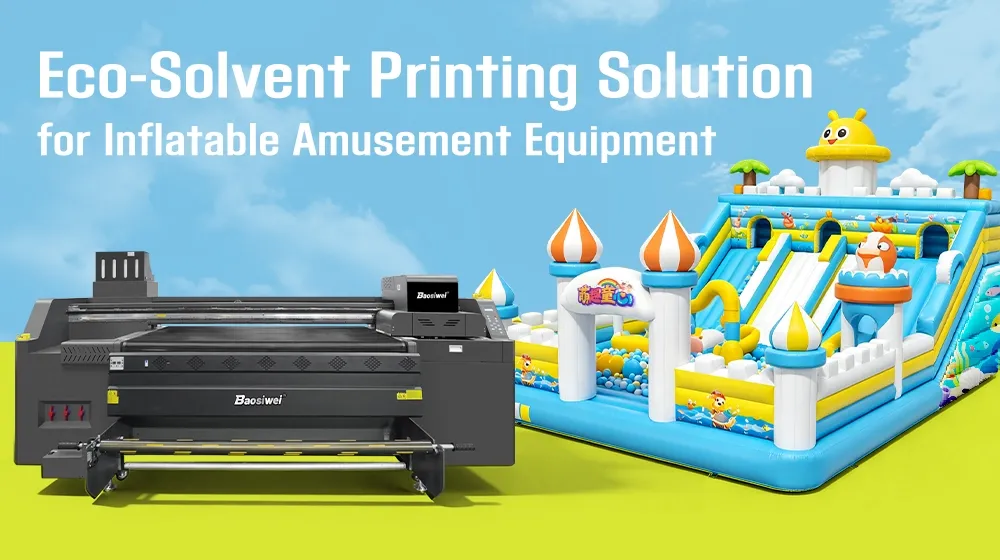
Eco-Solvent Printing Solution for Inflatable Amusement Equipment
Why Are Global Inflatable Equipment Manufacturers Switching to Eco-Solvent Printing? — Baosiwei hybrid Printer Solves PU Leather Cracking & Durability Issues
Inflatable amusement equipment—whether children's bouncy castles, inflatable slides, or bounce houses—continues to see strong global demand. From backyard rental businesses in North America, to indoor playgrounds in Europe, and temporary amusement parks in Southeast Asian shopping malls, vibrant cartoon graphics and themed designs play a key role in attracting children.
However, achieving high-adhesion, flexible, and scratch-resistant printing on PU leather has become a major challenge for manufacturers worldwide.
The Real Pain Points of Inflatable Materials & Production
No matter where you are located, once printed PU leather enters the stages of stretching, stitching, and inflation, pattern cracking becomes almost unavoidable.
This is especially true for dark-colored PU leather:
- Slight friction causes whitening
- Color fading occurs easily
- Product lifespan and brand image are heavily affected
A typical case comes from an inflatable castle manufacturer in Asia. They had long relied on UV printing, but encountered serious issues:
- During stitching, slight tension caused cracks along pattern edges
- In winter, low temperatures made the ink layer more brittle, significantly increasing cracking rates
- Dark-colored areas showed poor abrasion resistance, leading to constant customer complaints
A Real Case: From UV Failure to Eco-Solvent Success
Through industry referrals, they found Baosiwei and tested our 8-head eco-solvent hybrid printer.
During testing, we performed a simple but direct verification:
👉 Repeatedly scratching the printed PU leather with hard objects
Results:
- No color fading
- No scratches
- No whitening
The manufacturer then took samples back and conducted over a month of:
- Abrasion testing
- Bending tests
- Aging tests
Only after all physical performance indicators passed did they place an order.
A Global Shift: From UV to Eco-Solvent
This is not an isolated case.
From Turkey to Brazil, from Australia to Poland, more and more inflatable equipment factories are transitioning from UV printing to eco-solvent printing.
Let’s break down the core technical logic behind this shift.
Eco-Solvent vs UV Printing: The Fundamental Difference
The key difference lies in ink formation and bonding mechanism.
| Feature | UV Printing | Eco-Solvent Printing |
|---|---|---|
| Ink Layer | Forms a rigid film on the surface | Penetrates into the substrate and bonds with material |
| Flexibility | Poor, becomes brittle in low temperatures | Excellent, withstands bending and stretching |
| Abrasion Resistance | Moderate, dark areas prone to whitening | Outstanding, scratch-resistant |
| Application | Rigid or static materials | Inflatable products requiring folding & stretching |
In simple terms:
👉 UV printing = ink sits on the surface
👉 Eco-solvent printing = ink becomes part of the material
As long as the PU leather substrate does not crack, eco-solvent printed graphics will not crack.
This conclusion has been repeatedly validated through accelerated aging, bending, and abrasion tests—both internally and by customers.
Baosiwei Eco-Solvent Hybrid Printer: Built for PU Leather & Tarpaulin
Baosiwei does not just offer a printer—we provide a complete, globally validated eco-solvent printing solution.
Our system is specifically designed for flexible materials such as:
- PU leather
- Knife-coated tarpaulin
- Flexible PVC
Combined with high-adhesion, scratch-resistant inks, it solves three major industry problems:
- Material feeding deviation
- Poor print quality
- Low color fastness
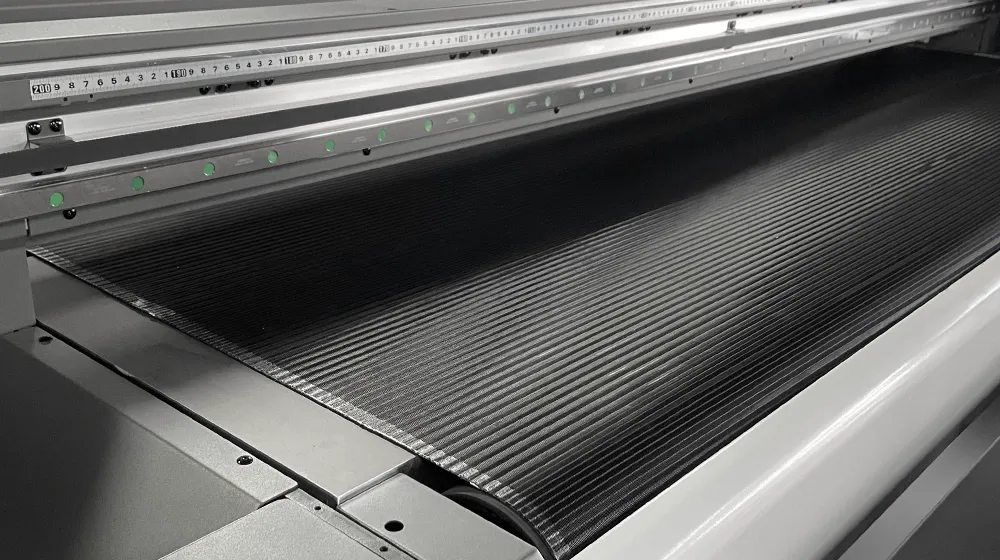
Precision Conveyor Belt System
Unlike traditional roll-fed printers, Baosiwei uses a high-friction industrial belt with a vacuum platform.
- Strong material adsorption
- Smooth feeding
- No slipping, wrinkling, or misalignment
This ensures precise color registration and stable continuous printing—critical for inflatable products.
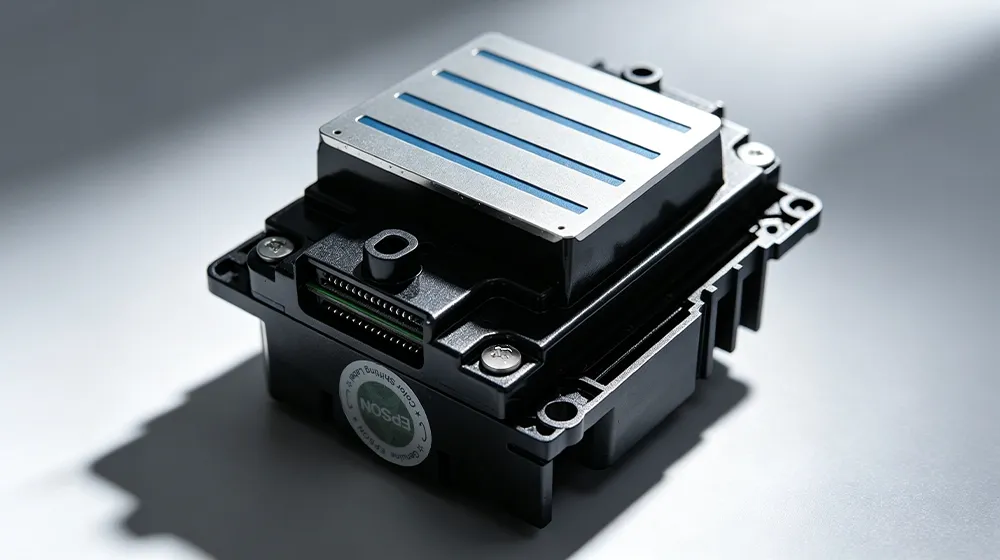
Industrial-Grade Printheads
Equipped with 8 Epson i3200-E1 printheads, delivering:
- 100–120 sqm/hour production speed
- Excellent color performance
- Uniform solid colors without banding
- Long-term stable operation with reduced clogging risk
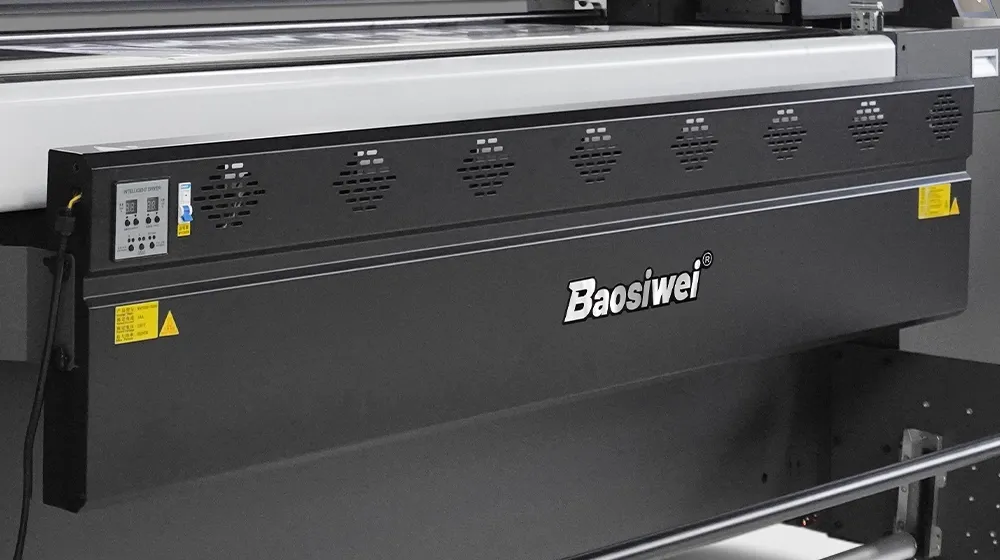
High-Efficiency Drying System
Printing, drying, and rewinding are completed simultaneously:
- Multiple high-speed drying fans
- Supports high-speed production
- Significantly improves delivery efficiency
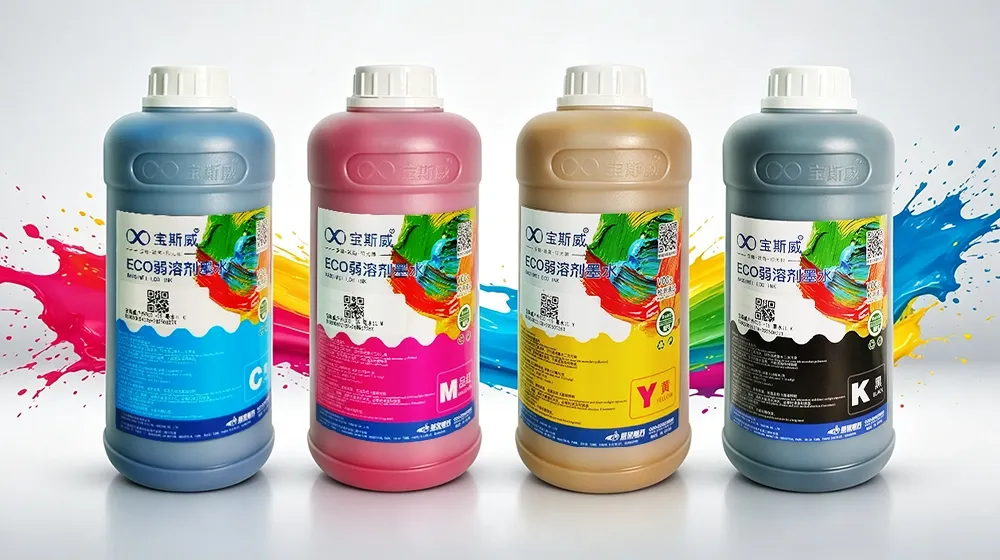
High-Adhesion Ink System
Scratch-resistant, flexible, and fade-resistant performance comes from Baosiwei’s self-developed inks.
Even when scratched repeatedly with:
- Metal keys
- Screwdrivers
👉 The printed PU leather remains intact.
This is not coincidence—it is the result of precise matching between equipment, ink, and process.
Are You Facing These Problems?
If you are experiencing any of the following:
- Cracking during stretching and stitching
- Poor abrasion resistance in dark areas
- UV prints becoming brittle in low temperatures
- Material slipping or misalignment during printing
👉 And you are looking for a globally proven eco-solvent solution
Baosiwei is your answer.
More Than Equipment: A Complete Solution
We provide:
- Ink compatibility guidance
- Printing parameter optimization
- Post-processing and stitching recommendations
You are welcome to send your own PU leather or tarpaulin materials for testing.
Conclusion
The safety, durability, and appearance of inflatable equipment ultimately depend on the bonding strength between ink and material.
Choosing the wrong printing process leads not only to returns and complaints—but also potential safety risks.
Baosiwei—30 years of expertise in eco-solvent printing—provides reliable and durable solutions for global inflatable equipment manufacturers.
👉 Contact us via website or email for specifications, samples, or quotations.
We support remote demos, sample testing, and factory visits.
(Follow Baosiwei’s official blog for more insights on PU leather and flexible material printing solutions.)