
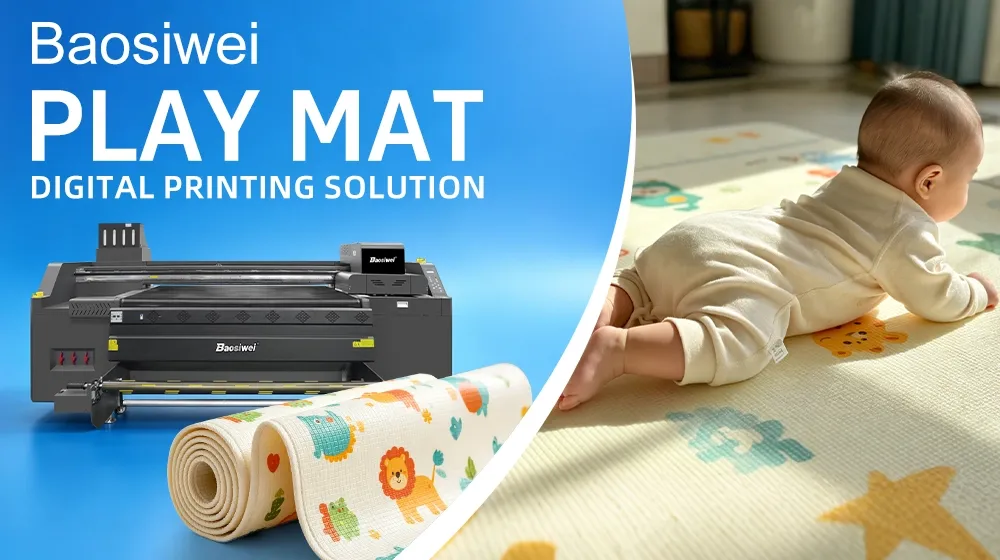
How Can Play Mat Factories Enter the High-End Market? 3 Strategies Worth Learning
How Can Play Mat Factories Enter the High-End Market? 3 Strategies Worth Learning
In recent years, the play mat industry has been going through a major transformation.
On one side, low-end products are trapped in intense price competition. Similar patterns, repetitive designs, and shrinking profit margins have made survival increasingly difficult for many factories.
On the other side, demand for premium play mats is steadily growing — especially products that are:
- Eco-friendly
- Odor-free
- Soft and comfortable
- Custom-designed
- Suitable for export markets
As consumer expectations continue to rise, more manufacturers are realizing that competing only on price is no longer sustainable.
Instead, the real opportunity lies in:
High-value, differentiated products.
Today, we’ll look at how one factory successfully upgraded its play mat business through three key changes.
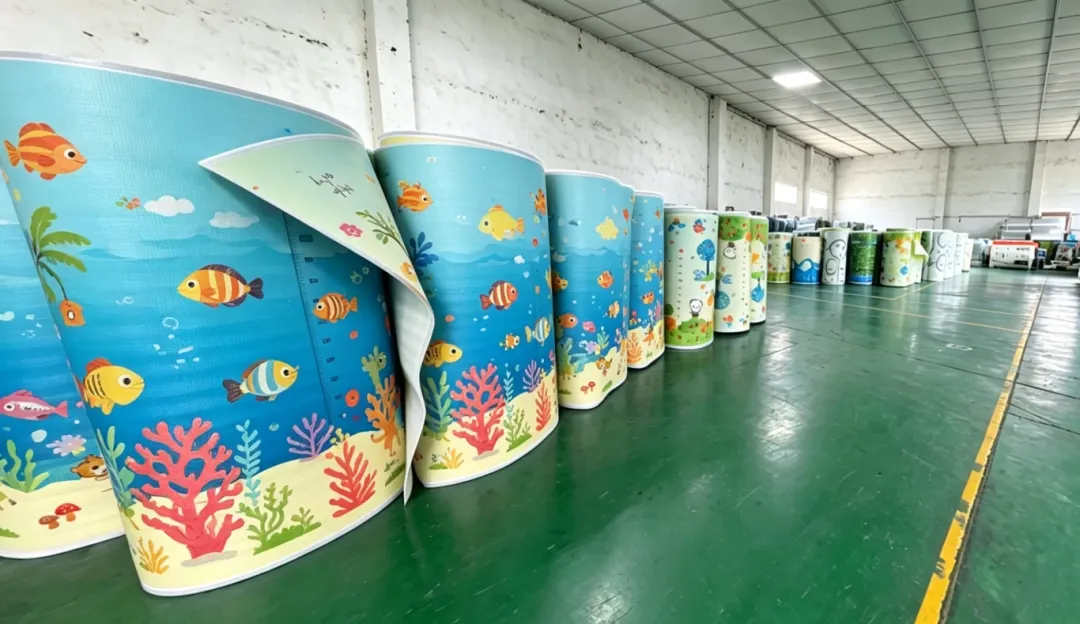
01|Breaking Away from Repetitive Designs
One of the biggest problems in today’s play mat market is product homogenization.
Many products look almost identical.
Under traditional printing methods, factories often reuse:
- Standard cartoon patterns
- Simple color combinations
- Repetitive layouts
because producing complex graphics is expensive and risky.
Every additional color usually means:
- Another printing plate
- Higher setup costs
- More difficult color registration
- Greater defect risk
The more complicated the design becomes, the harder it is to control:
- Color overflow
- Misalignment
- Inconsistent printing quality
As a result, many factories face a difficult choice:
Either create simple low-cost products and compete on price,
or produce more advanced designs with shrinking profit margins.
This factory chose a different path.
They introduced:
Digital printing solutions designed specifically for play mats.
The biggest advantage?
No traditional plate-making process.
Complex graphics, gradient colors, detailed illustrations, and customized artwork can all be printed directly from digital files.
Designers simply upload the artwork, and production can begin immediately.
This completely changed the product development process.
Suddenly, the factory was no longer limited by traditional printing restrictions.
They could create:
- Modern home-style designs
- Minimalist aesthetics
- Soft-tone color palettes
- Personalized custom graphics
- Trend-driven collections
This became especially important for overseas markets, where consumers increasingly care about:
- Design quality
- Home décor compatibility
- Premium appearance
- Brand uniqueness
For many high-end play mat brands, digital printing has become an important tool for product differentiation.
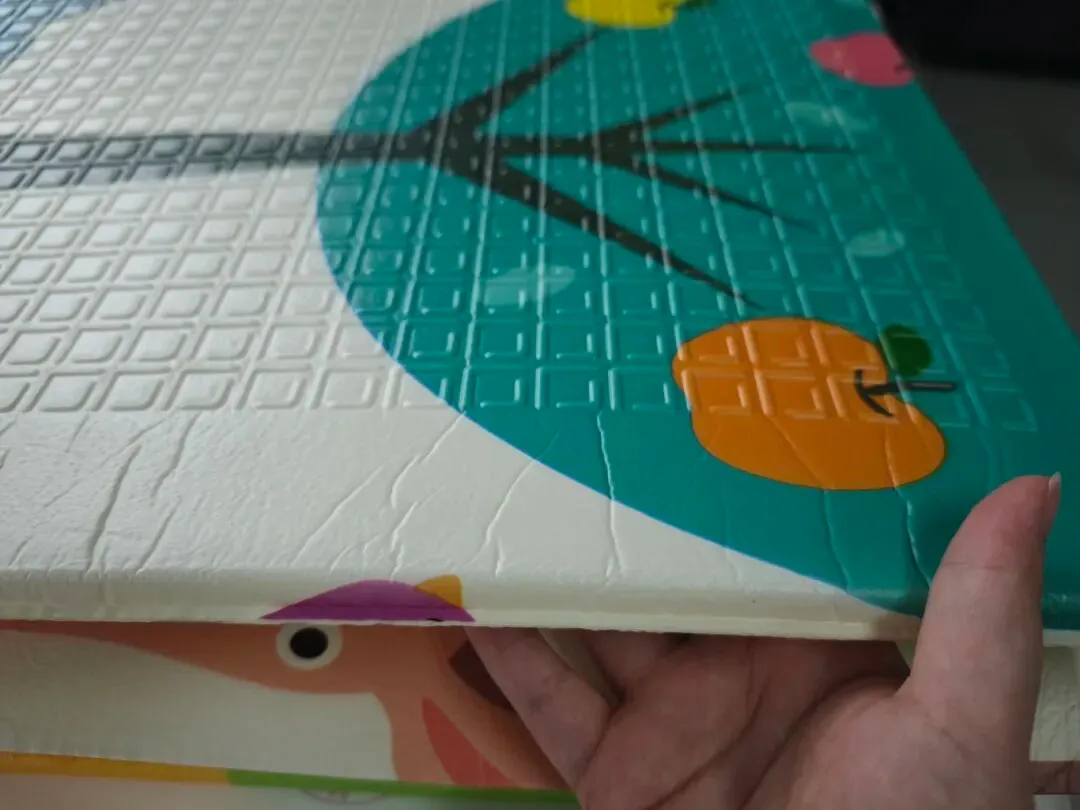
02|Eco-Friendly Quality Is the Key to Premium Markets
In highly competitive low-price markets, some factories reduce costs by lowering product quality.
This often leads to problems such as:
- Strong odors
- Hard surface feel
- Bubbling after folding
- Wrinkling
- Poor print durability
While this may reduce short-term costs, it also damages long-term competitiveness.
Today, both domestic and international buyers are paying much closer attention to:
- Product safety
- Environmental standards
- VOC emissions
- Ink safety
- Material quality
Especially in the baby and children’s product market.
In many export markets, buyers now ask:
“Does the product meet environmental standards?”
before discussing price.
Recognizing this shift, the factory repositioned itself toward:
The premium export market.
To achieve this, they upgraded three key areas simultaneously:
- Base materials
- Printing technology
- Ink solutions
They adopted more eco-friendly and softer materials.
At the same time, they introduced specialized digital printing equipment for play mats, which reduced traditional color registration problems and improved print consistency.
Compared with conventional printing methods, the results included:
- Cleaner print edges
- Better color accuracy
- More stable complex graphics
- Softer surface feel
- Reduced odor
- Improved folding resistance
The final products were much better aligned with the expectations of premium overseas buyers.
Many manufacturers eventually realize:
The most profitable customers are rarely the ones looking for the cheapest products.
Instead, they are the customers willing to pay for quality.
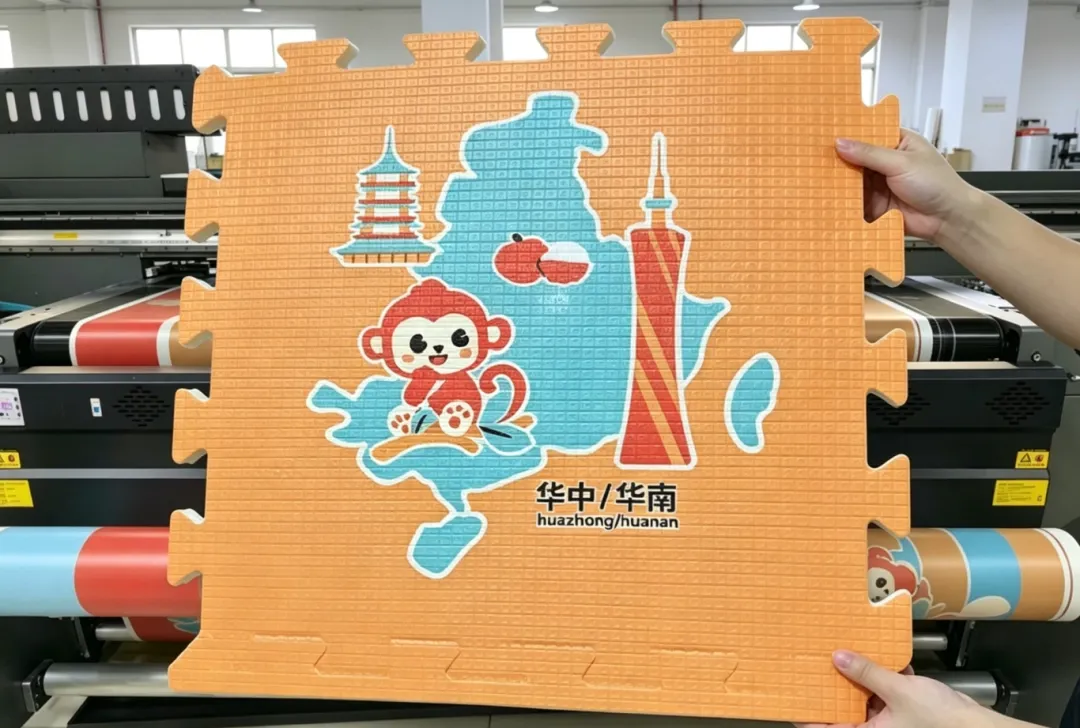
03|Fast Sampling and Small-Batch Production Are Becoming Essential
The market is changing rapidly — especially with the growth of e-commerce.
Today, brands want:
- Faster product launches
- More frequent design updates
- Small-batch testing
- Flexible production
A new design may initially require only:
- 50 pieces
- 100 pieces
- 200 pieces
before scaling up.
Under traditional production methods, simply creating printing plates could take days.
The entire process — from design to sampling to final production — often required more than a week.
For complex projects, even longer.
But in today’s fast-moving market:
Slow production means missed opportunities.
Digital printing changes this completely.
Since no plate-making is required, production can begin almost immediately after confirming the design file.
This allows factories to achieve:
- Faster sampling
- Faster design switching
- Small-batch production
- Multi-SKU flexibility
- Even single-piece customization
More importantly, digital printing also helps reduce inventory pressure.
Traditional production often forces factories to stock large quantities to offset setup costs.
This can lead to:
- Outdated inventory
- Overstock problems
- Cash flow pressure
Digital printing supports:
On-demand manufacturing.
Factories can produce exactly what customers order, helping reduce inventory risks while improving operational flexibility.
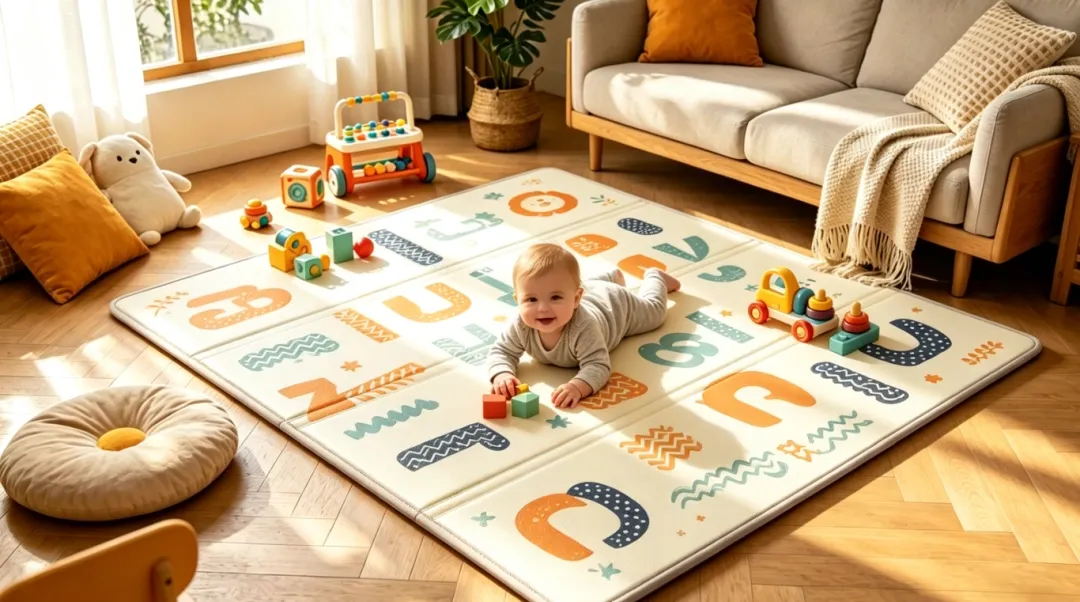
Why Are More Premium Play Mat Brands Choosing Digital Printing?
Because consumer expectations are changing.
Today’s buyers care more about:
- Safety
- Eco-friendliness
- Design quality
- Personalization
- Home aesthetics
Traditional manufacturing methods are becoming less capable of handling:
- Small-batch orders
- Multiple designs
- Fast delivery
- High-quality customization
This is why more factories are using:
Digital printing solutions
to enter the premium market.
Conclusion
The future competition in the play mat industry is no longer just about who offers the lowest price.
Instead, it is about:
Who can create differentiated products faster.
Especially in:
- Premium baby product markets
- Export markets
- Home décor markets
- Customized e-commerce markets
consumers are increasingly willing to pay for:
- Quality
- Safety
- Design
- Personalization
If your factory is also facing challenges such as:
- Severe product homogenization
- Declining profit margins
- Increasing small-batch orders
- Higher customer expectations
it may be time to rethink traditional production methods.
If you would like to learn more about:
- Play mat digital printing solutions
- Equipment recommendations
- Eco-friendly ink systems
- Export-oriented production
- Small-batch manufacturing workflows
feel free to contact Baosiwei through our website form or email.
With extensive experience in the play mat industry, we can provide tailored digital printing solutions based on your materials, applications, and production requirements.