
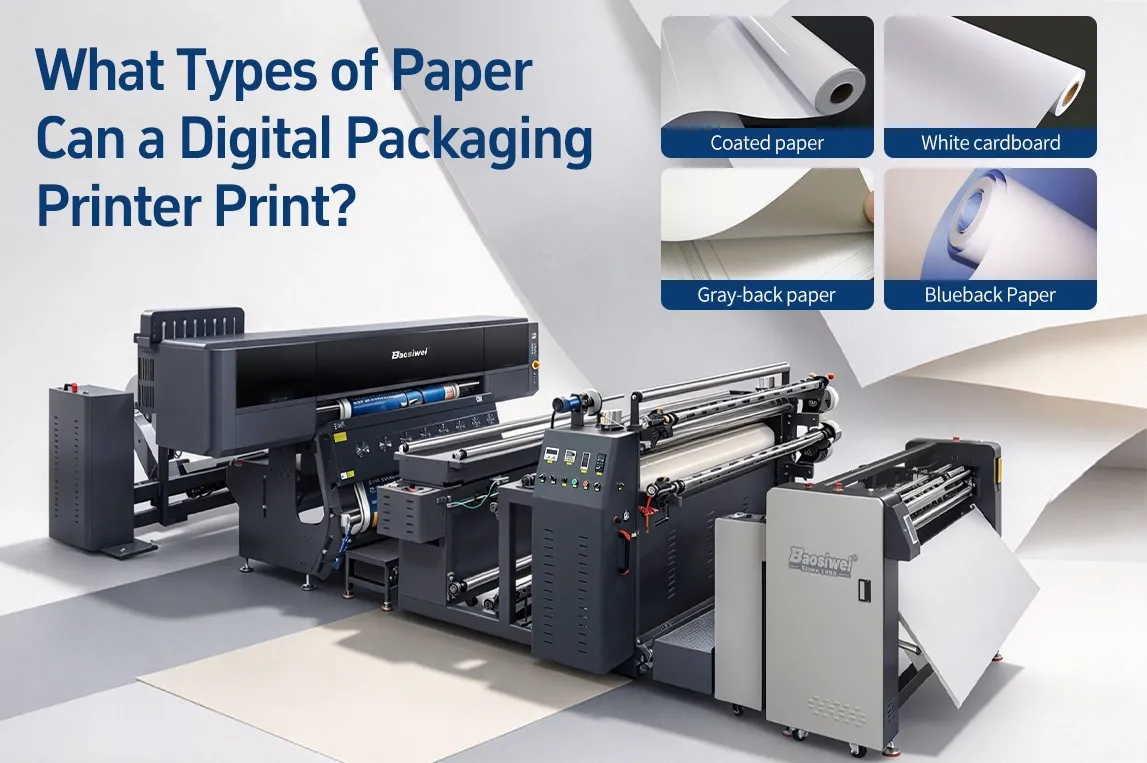
What Types of Paper Can a Digital Packaging Printer Print?
What Types of Paper Can a Digital Packaging Printer Print?
Different packaging papers have different surface finishes, thicknesses, stiffness, ink absorption, and end uses. These properties directly affect how a printed design looks and which products the paper is suitable for.
For packaging manufacturers, digital printing is particularly useful for short runs, multiple SKUs, customized designs, and fast turnaround. This makes paper compatibility an important consideration when evaluating a digital packaging printer.
So, what types of paper can a digital packaging printer print?
Common materials include coated paper, white cardstock, white-top grey-back board, uncoated offset paper, gift wrapping paper, and blue-back paper. The first five are commonly associated with packaging and paper products, while blue-back paper can extend the printer's applications into advertising and poster printing.
Below, we look at the key characteristics, advantages, limitations, and typical applications of each paper type.
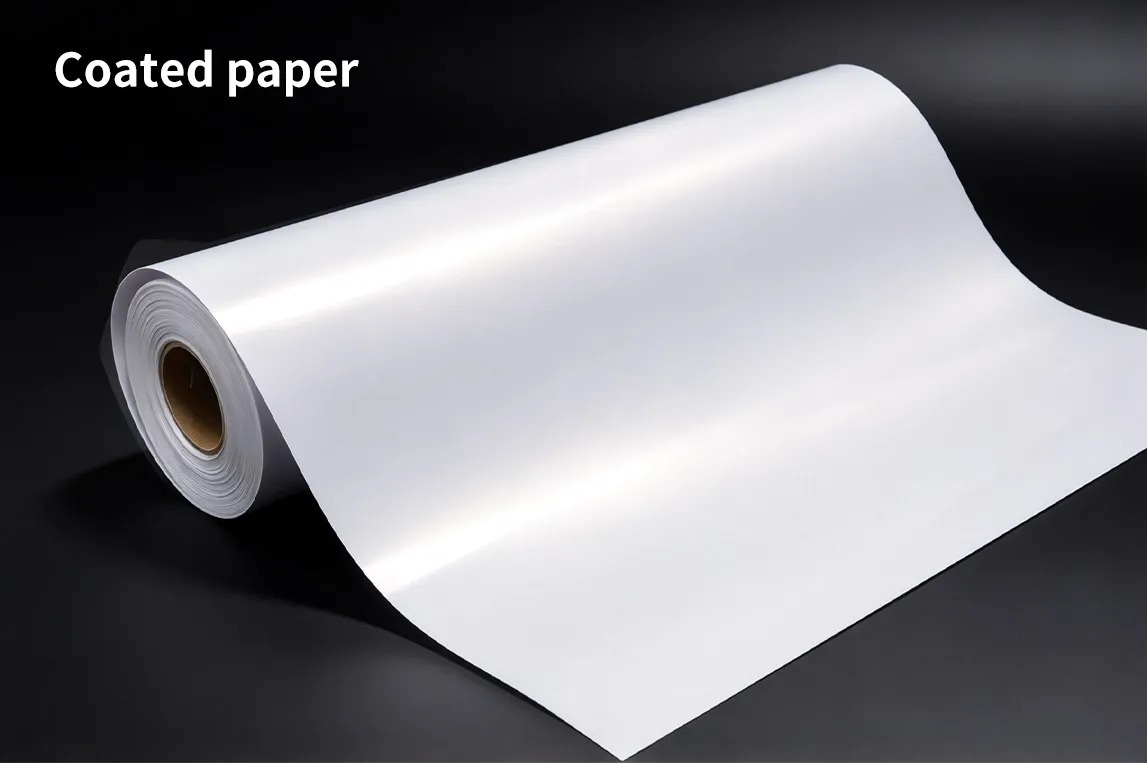
1. Coated Paper
Coated paper is widely used in packaging and commercial printing. Its surface is treated with a coating that gives the paper a relatively smooth finish, good whiteness, and favorable printability.
Key Characteristics
Coated paper has a smooth and relatively uniform surface, which supports detailed color printing. Depending on the surface finish, it can include gloss-coated, matte-coated, single-sided coated, and double-sided coated paper.
Common paper weights include 70, 80, 105, 128, 157, 180, 200, 230, 250, 300, 400, and 450 gsm. Higher-weight coated papers, such as those in the 180–400 gsm range, are also used for packaging applications where both print quality and paper stiffness are required. Actual print performance depends on the paper surface, ink, and printer settings.
Advantages
- Smooth surface for detailed color graphics
- Good color reproduction
- Suitable for photographs and high-saturation designs
- Compatible with finishing processes such as lamination
Limitations
The smooth surface of coated paper can be more susceptible to scratches during handling. Compared with cardstock of the same weight, coated paper is generally chosen more for its surface and print appearance than for maximum stiffness.
Typical Applications
Coated paper is commonly used for:
- Color boxes
- Product packaging
- Promotional materials
- Advertising prints
For packaging orders that require detailed graphics and strong color reproduction, coated paper is a common material for digital printing.
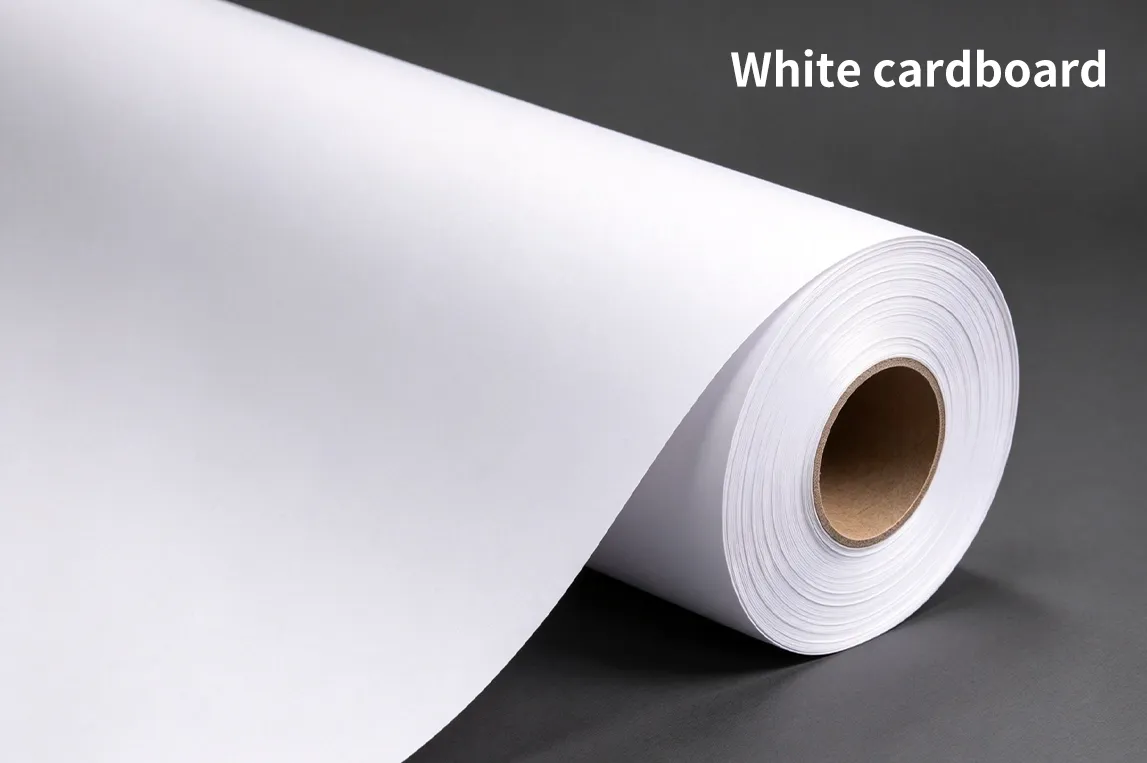
2. White Cardstock
White cardstock is a thicker and more rigid paper commonly used for packaging and other paper products. It is generally made from bleached chemical pulp and processed to provide a smooth, even white surface.
Common weights include 200, 250, 300, 350, and 400 gsm, although specifications vary by supplier and grade.
Key Characteristics
One of the main characteristics of white cardstock is its thickness and stiffness. Compared with standard printing paper, it provides more structural support, making it suitable for packaging products that need to retain their shape.
Its white surface also provides a suitable base for full-color digital printing.
Advantages
- Higher thickness and stiffness
- White surface suitable for color printing
- Suitable for packaging that requires structural support
- Versatile across different paper products
- Suitable for a wide range of packaging applications
Limitations
The surface of white cardstock can be susceptible to scratches, particularly on dark or solid-color prints. Lamination or other finishing processes can be used when additional surface protection is required during production and transportation.
Typical Applications
White cardstock is widely used for:
- Color boxes
- Shopping bags
- Packaging cartons
- Packaging covers
- Postcards
For packaging products that require both color graphics and paper stiffness, white cardstock is a common material for digital packaging printing.
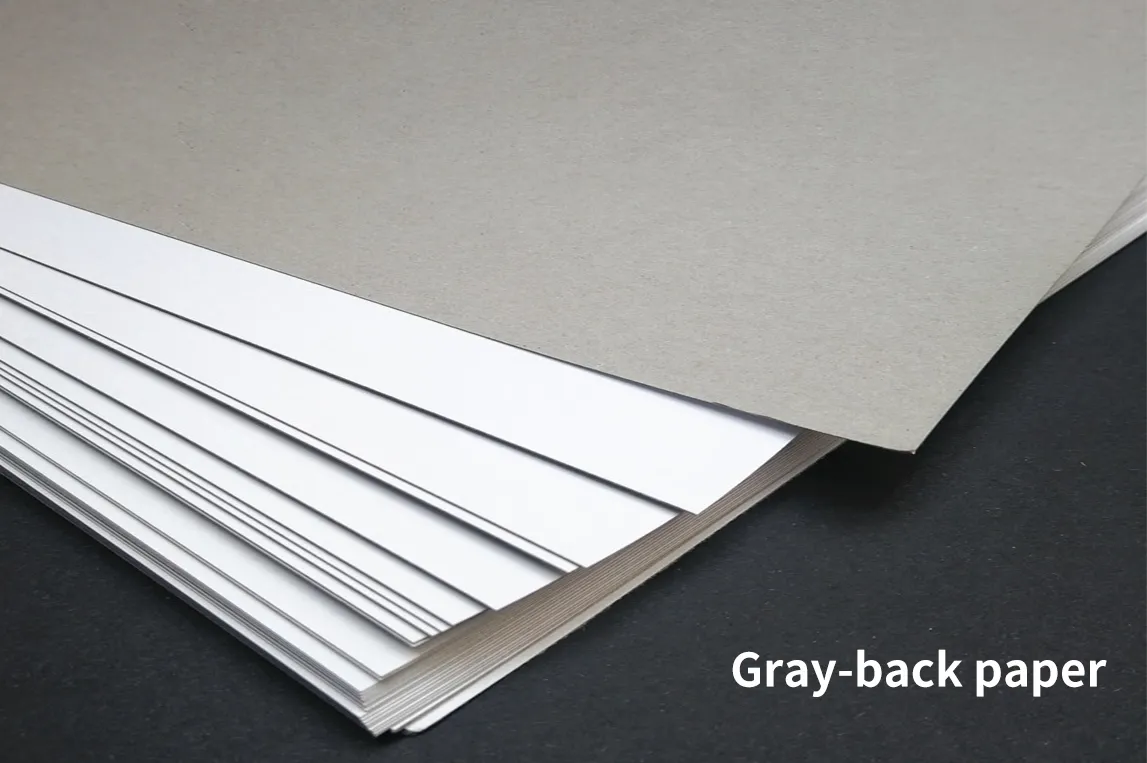
3. White-Top Grey-Back Board
White-top grey-back board is also known as grey-back board or grey-back white board. It has a white coated front surface and a grey back, making it a common paperboard material for packaging.
Compared with some white cardstocks, grey-back board can offer a more cost-oriented option while still providing useful stiffness for packaging structures.
Key Characteristics
The front side has a white coated surface designed primarily for color printing, while the back is grey and relatively rough.
Common weights include 200, 230, 250, 270, 300, 350, 400, and 450 gsm, depending on the grade and supplier.
Advantages
- White front surface for color printing
- Good stiffness for packaging structures
- Cost-oriented option for certain packaging applications
- Suitable for relatively heavy packaging materials
Limitations
The grey back is generally not the primary color-printing surface, so this material is mainly used for single-sided color packaging.
In some corrugated-lamination applications, the rough grey side can be used as the bonding surface when the printed board is laminated to corrugated board. The appropriate side and finishing process therefore depend on the final packaging structure.
Typical Applications
Grey-back board is commonly used for:
- Printed packaging boxes
- Takeaway food boxes
- Shipping and delivery packaging
- Product packaging
- Single-sided printed cartons
For packaging orders where both paper stiffness and material cost need to be considered, grey-back board is a commonly used option.
4. Uncoated Offset Paper
Uncoated offset paper, also known as offset paper or woodfree paper, does not have the smooth coating found on coated paper. This gives it a more natural paper texture and appearance.
Common weights include 70, 80, 100, and 120 gsm.
Key Characteristics
The surface of uncoated offset paper has no prominent glossy coating. Its relatively even ink absorption makes it suitable for text, line work, and standard color graphics.
Advantages
- Natural paper texture
- Relatively even ink absorption
- Suitable for text and graphic content
- Available in a wide range of paper weights
- Suitable for many paper products
Limitations
Compared with coated paper, uncoated paper generally produces a different visual effect, particularly for highly saturated images and glossy designs.
If a packaging design requires very vivid colors or a glossy surface appearance, the paper type should be selected according to the final product requirements.
Typical Applications
Uncoated offset paper is commonly used for:
- Product manuals
- Books and publications
- Promotional materials
- Paper-based packaging products
For products focused on text, line work, and standard graphics, uncoated offset paper can be a practical material for digital printing.
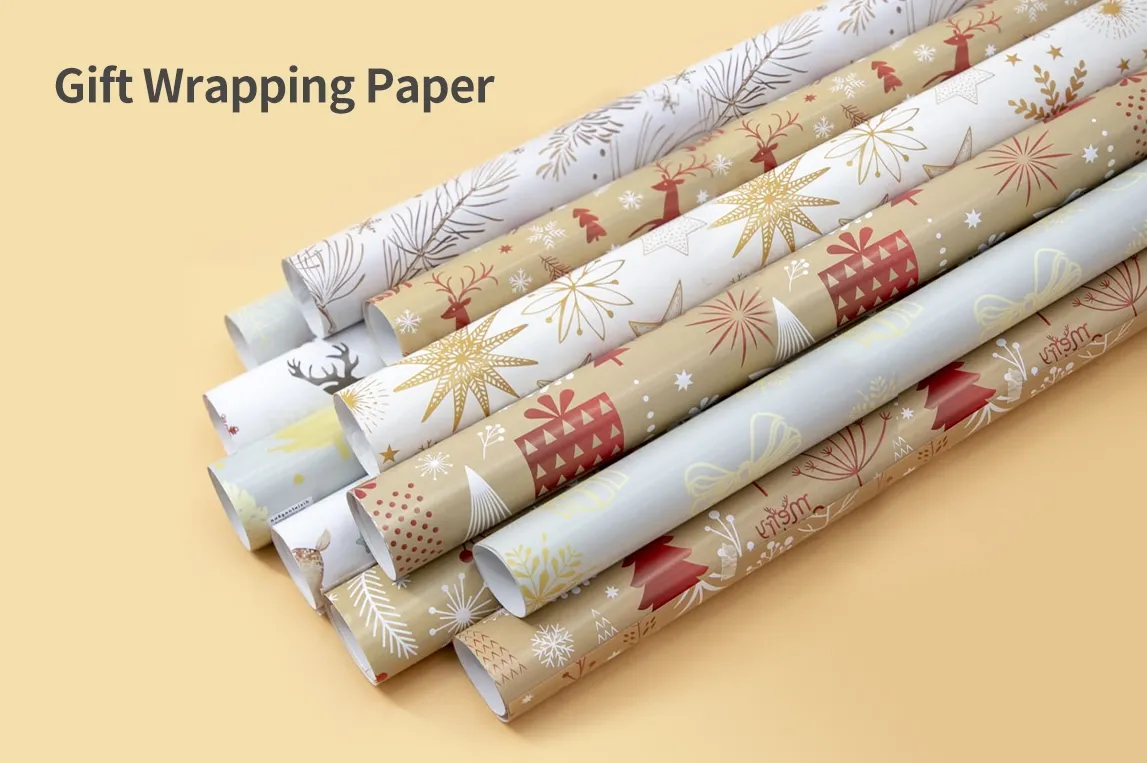
5. Gift Wrapping Paper
Gift wrapping paper is mainly used for gift and seasonal packaging, including Christmas gift packaging, birthday gifts, and customized gift products.
Unlike long-run packaging production, gift packaging often involves frequent design changes. Different holidays, brands, and customers may require different artwork, making digital printing useful for flexible production.
Key Characteristics
Gift wrapping paper places more emphasis on graphic design and frequent artwork changes. A single production order may contain multiple designs, or artwork may need to be changed quickly for different seasonal campaigns.
Advantages
- Suitable for customized graphics
- Suitable for multiple SKUs
- No separate printing plate is required for each design
- Suitable for short-run production
- Easy to update seasonal and promotional designs
Limitations
Gift wrapping paper can vary considerably in material and surface finish. Actual printing performance therefore depends on the paper surface, ink absorption, and finishing process.
Testing the actual material before production can help determine suitable printing parameters and expected color performance.
Typical Applications
Gift wrapping paper is commonly used for:
- Seasonal gift packaging
- Christmas gift wrapping
- Customized gift boxes
- Personalized packaging
For short-run gift packaging with frequent artwork changes, digital printing can reduce the production constraints associated with conventional plate-based printing.
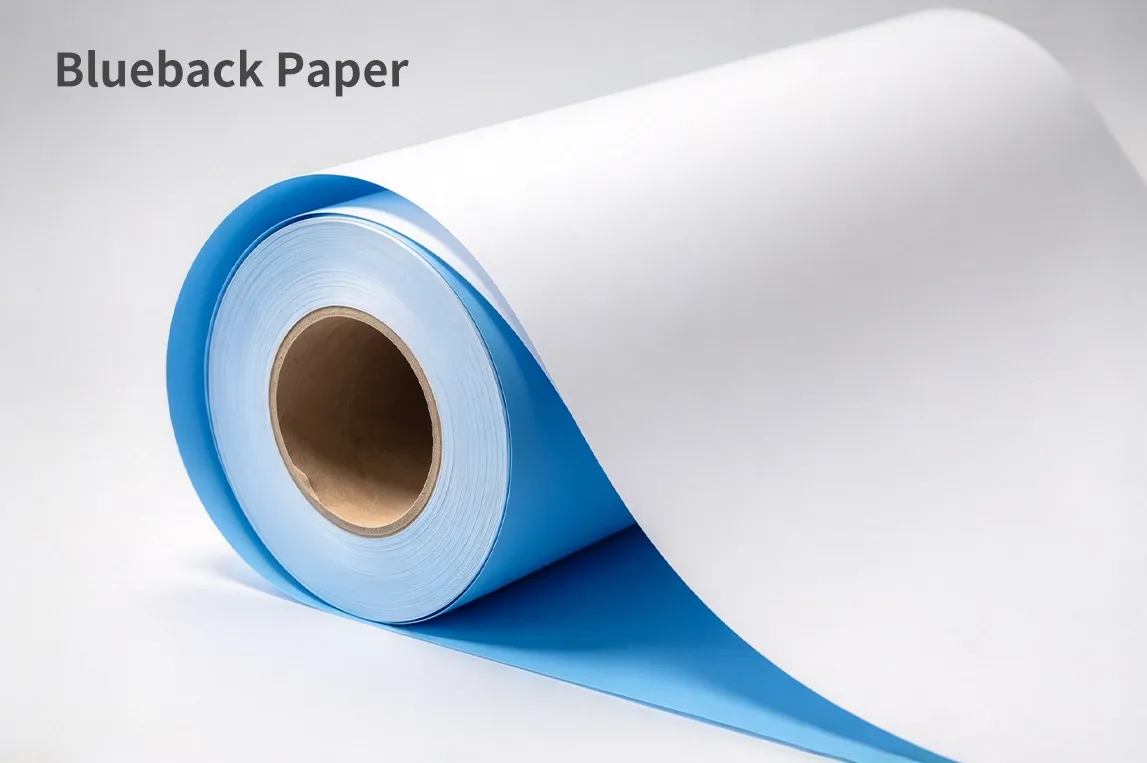
6. Blue-Back Paper
Blue-back paper is a specialty paper mainly used for posters, advertising, and visual displays, rather than conventional packaging production.
Its main feature is a printable front surface with a blue backing layer that provides a degree of opacity. This can help reduce the visibility of the background when posters are applied to existing surfaces.
Key Characteristics
Blue-back paper is designed primarily for visual communication. The front side is used for printing advertising graphics, while the blue backing helps reduce background show-through.
This is one of the main differences between blue-back paper and standard poster paper.
Advantages
- Suitable for full-color advertising graphics
- Blue backing provides a degree of opacity
- Suitable for posters and advertising displays
- Useful for promotional content that needs frequent replacement
Limitations
Blue-back paper is mainly intended for advertising and display applications, not as a mainstream packaging material.
For packaging manufacturers, it can be considered an extended application material when the digital printer is also used to take on advertising or display printing jobs.
Typical Applications
Blue-back paper is commonly used for:
- Advertising posters
- Outdoor advertising
- Commercial promotions
- Large-format advertising displays
For print businesses handling frequently changing advertising content, digital printing can reduce the limitations associated with conventional plate-based production.
Conclusion
The range of papers used in packaging and related print production is broad. Coated paper, white cardstock, white-top grey-back board, uncoated offset paper, and gift wrapping paper cover a variety of packaging and paper-product applications, while blue-back paper can extend a digital printer into advertising and display applications.
Each paper type has different characteristics in terms of surface finish, stiffness, ink absorption, and end use. Understanding these differences helps packaging manufacturers evaluate which materials and printing processes are suitable for different customer orders.
If you are testing a new packaging material or want to confirm whether a specific paper is suitable for digital printing, you can provide the paper specifications, product dimensions, and actual material samples for testing. Baosiwei can evaluate the material and help determine an appropriate printing setup for your application.
Email: [email protected]