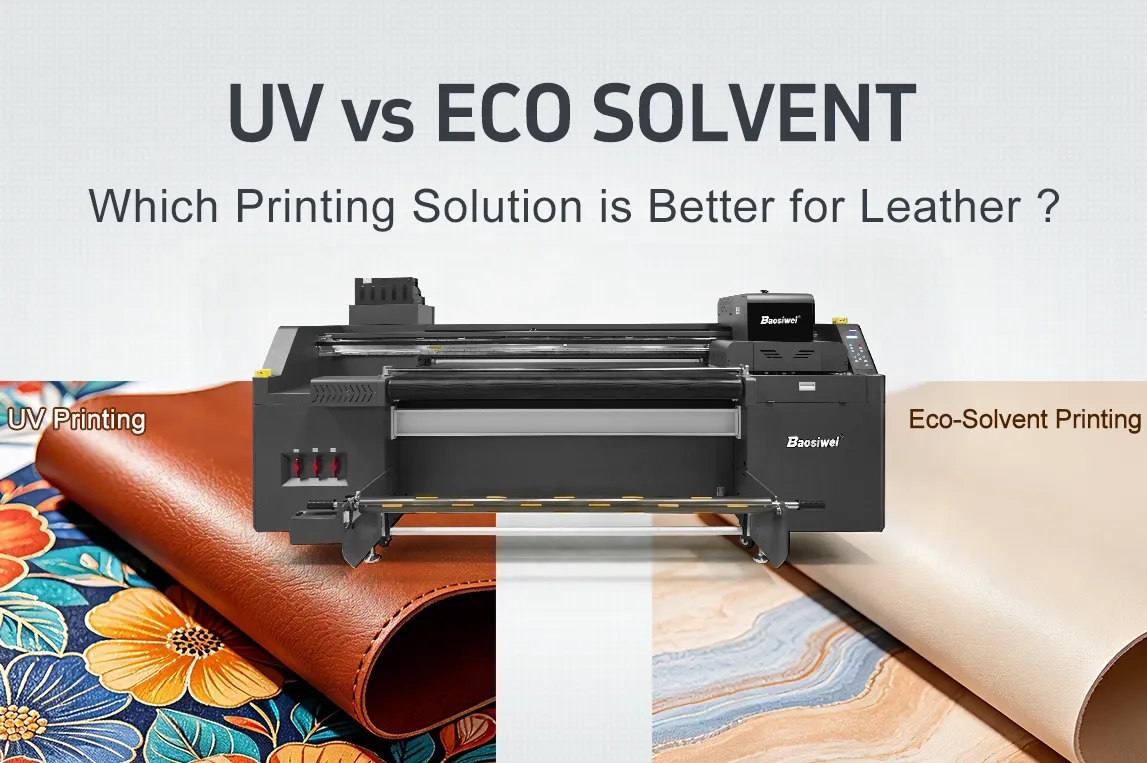
Why Do Some Leather Printing Factories Choose UV, While Others Prefer Eco Solvent?
Why Do Some Leather Printing Factories Choose UV, While Others Prefer Eco Solvent?
For leather printing manufacturers, one question has become increasingly common in recent years:
Should you choose an eco solvent printer or a UV printer?
Simply put:
- Eco solvent printing allows the ink to penetrate into the leather surface, creating a more natural integration with the material.
- UV printing cures the ink directly on the leather surface, requiring no drying process while also enabling textured finishes, embossed effects, and spot gloss applications.
Both solutions have their own advantages, and each is better suited for different types of orders.
In this article, we’ll compare them from the four perspectives leather factories care about most:
- Investment cost
- Production process compatibility
- Environmental performance & odor
- Low-temperature flexibility and crack resistance
This will help you better determine which solution is more suitable for your products.
Cost: Eco Solvent Has a Lower Initial Investment
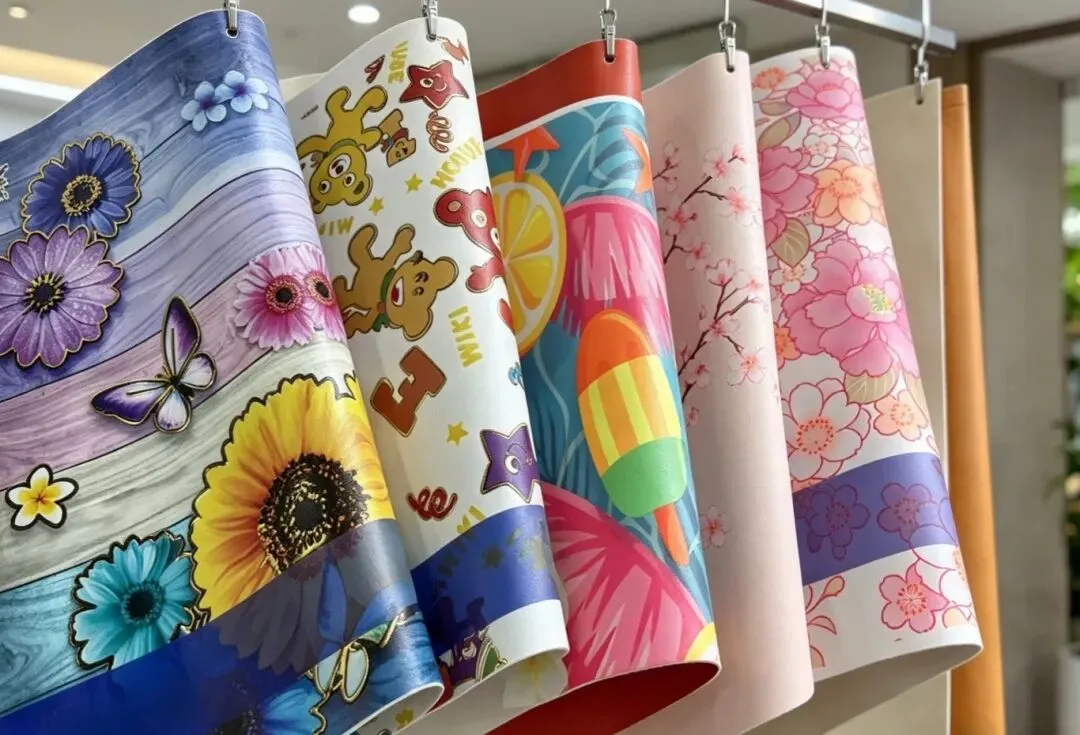
From the perspective of equipment purchasing costs, eco solvent printers generally have a lower entry barrier.
Not only is the machine investment more affordable, but eco solvent inks are usually less expensive than UV inks, giving eco solvent printing an advantage in long-term operating costs as well.
For factories that are just entering the leather printing industry, have limited budgets, or mainly focus on large-volume production, eco solvent solutions are often a more cost-effective choice.
Of course, while UV printing typically has slightly higher operating costs, it also tends to require less labor.
Since there is no additional drying or heat-fixing process, production workflows can become much simpler, especially for factories focused on fast delivery orders.
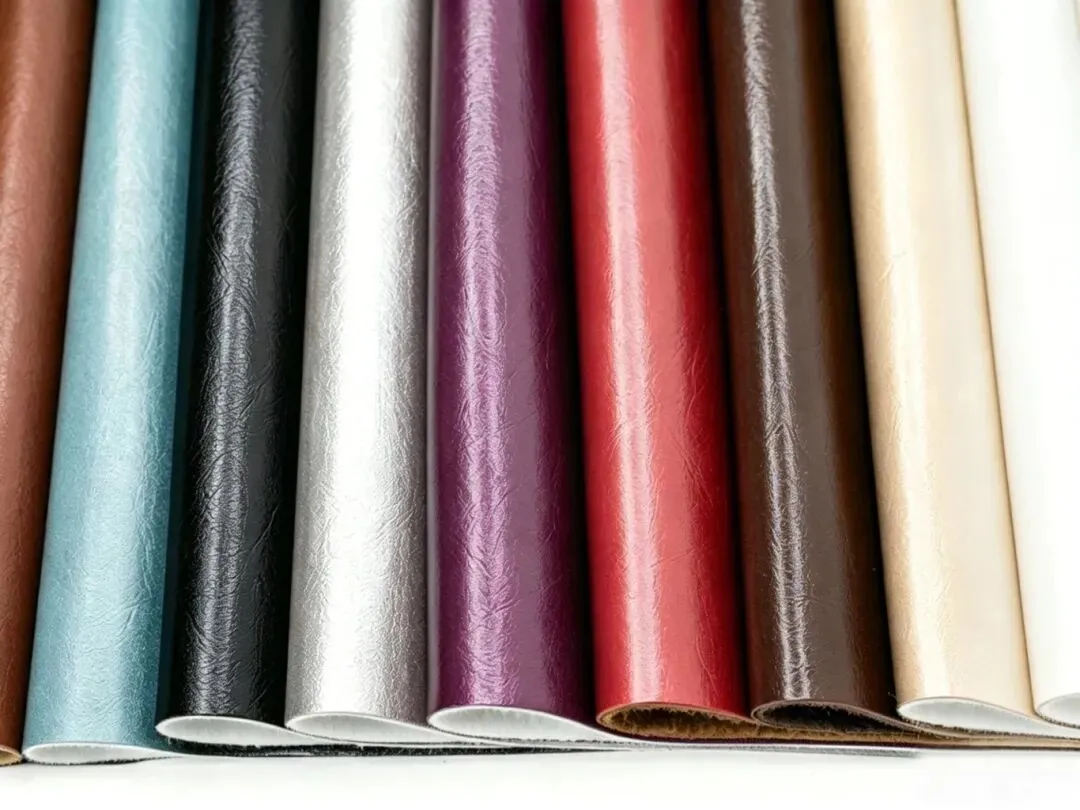
Process Comparison: UV Is Better for Fast Delivery, While Eco Solvent Is Ideal for Mass Production
01 UV Printing: Wider Material Compatibility and Faster Delivery
One of the biggest advantages of UV printing is its strong material compatibility.
Whether it’s PU leather, PVC leather, microfiber leather, or certain special surface materials, most can be printed directly.
UV printing becomes especially advantageous for dark-colored leather applications.
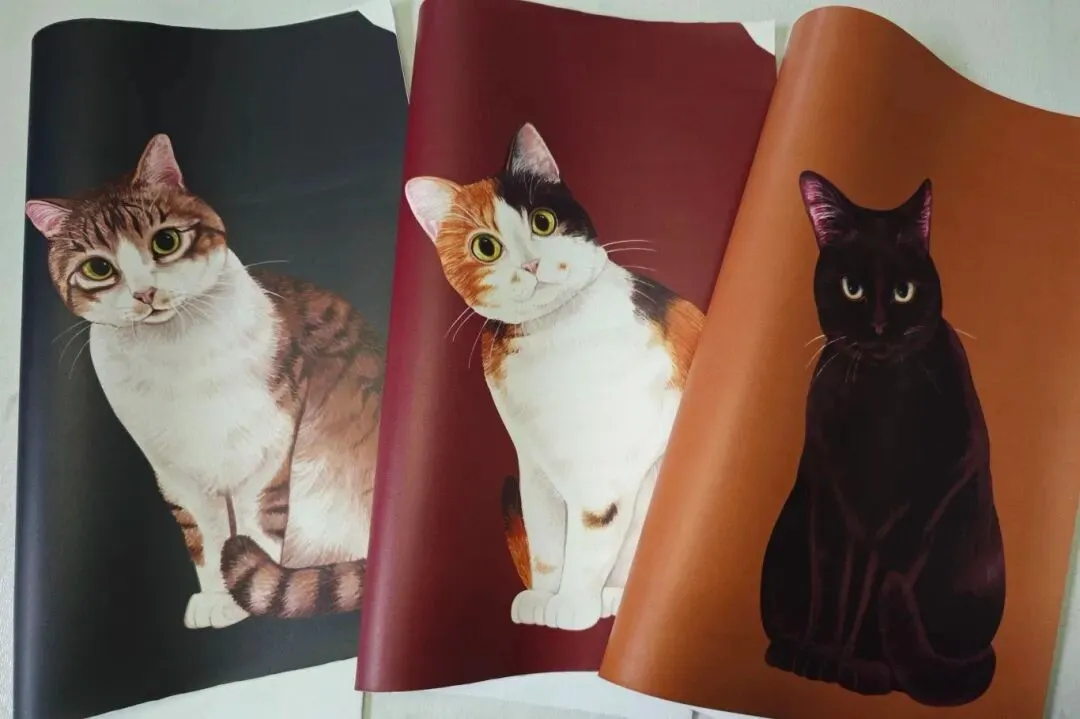
High-density UV inks deliver brighter colors, stronger saturation, and higher visual impact on dark materials, making them ideal for personalized leather products.
At the same time, UV printing offers “print-and-go” production.
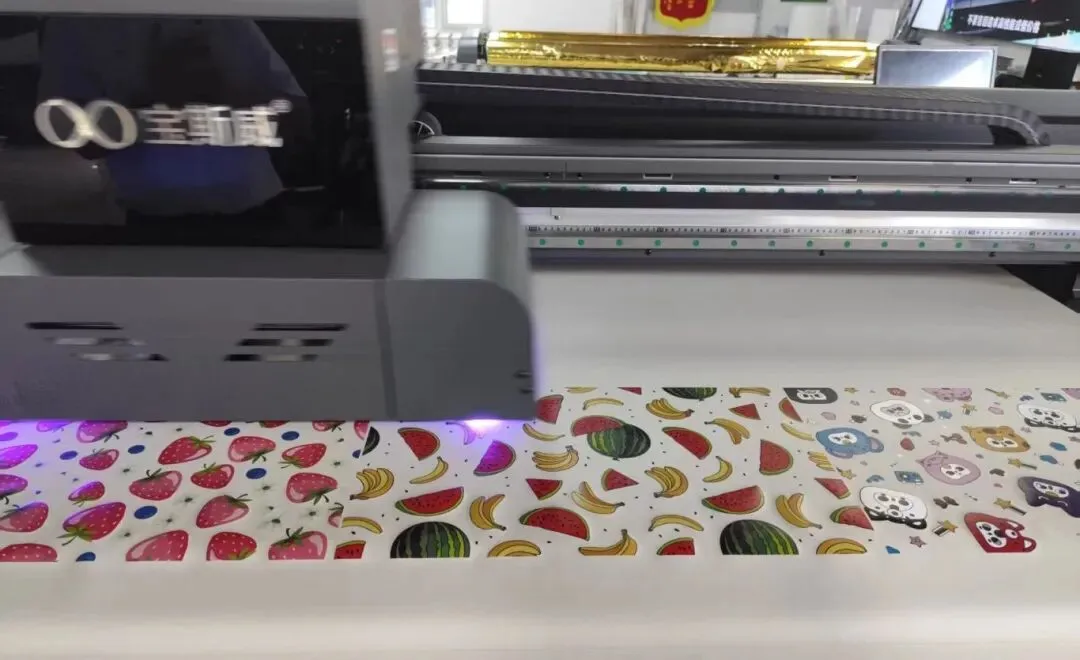
After printing, there is no need to wait for drying. The material can immediately move into cutting, sewing, packaging, and other downstream processes.
For e-commerce orders, this efficiency advantage is extremely important.
Many customers place orders today and expect shipment tomorrow, and UV printing can significantly shorten production lead times.
In addition, UV printing can also achieve:
- Textured finishes
- Spot gloss effects
- Embossed effects
- Foil-like visual effects
This gives UV printing stronger competitiveness in high-value-added leather products.
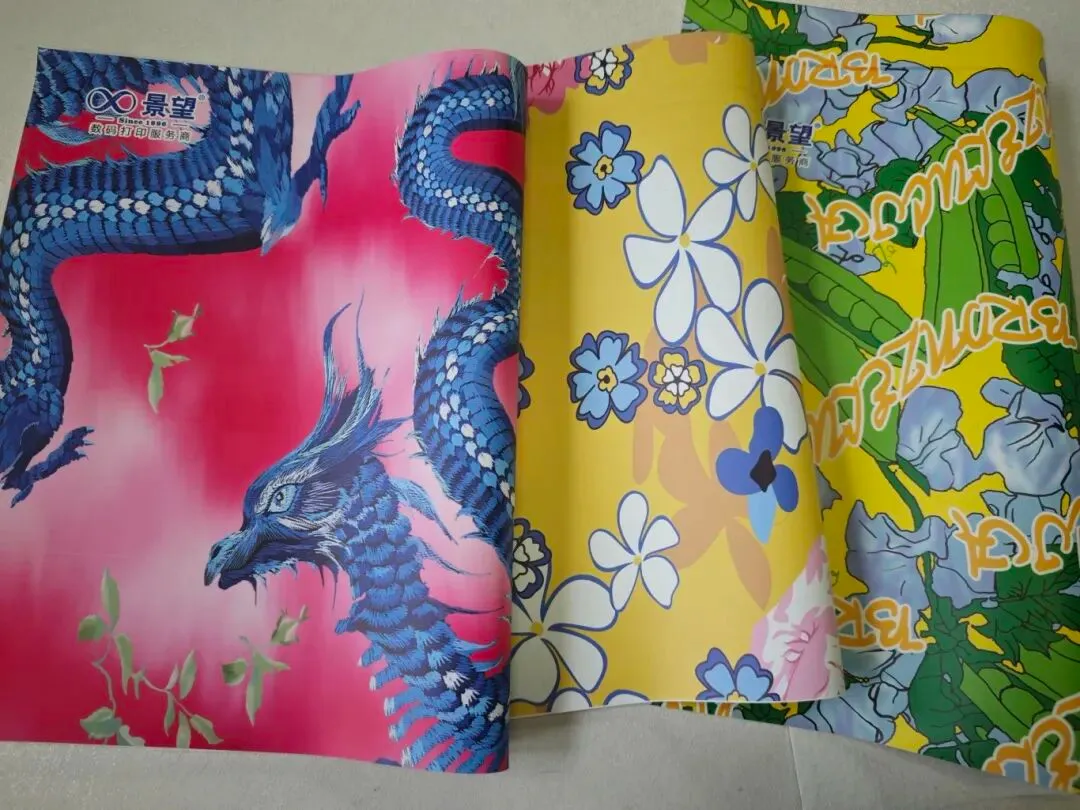
02 Eco Solvent Printing: More Suitable for Large-Scale Continuous Production
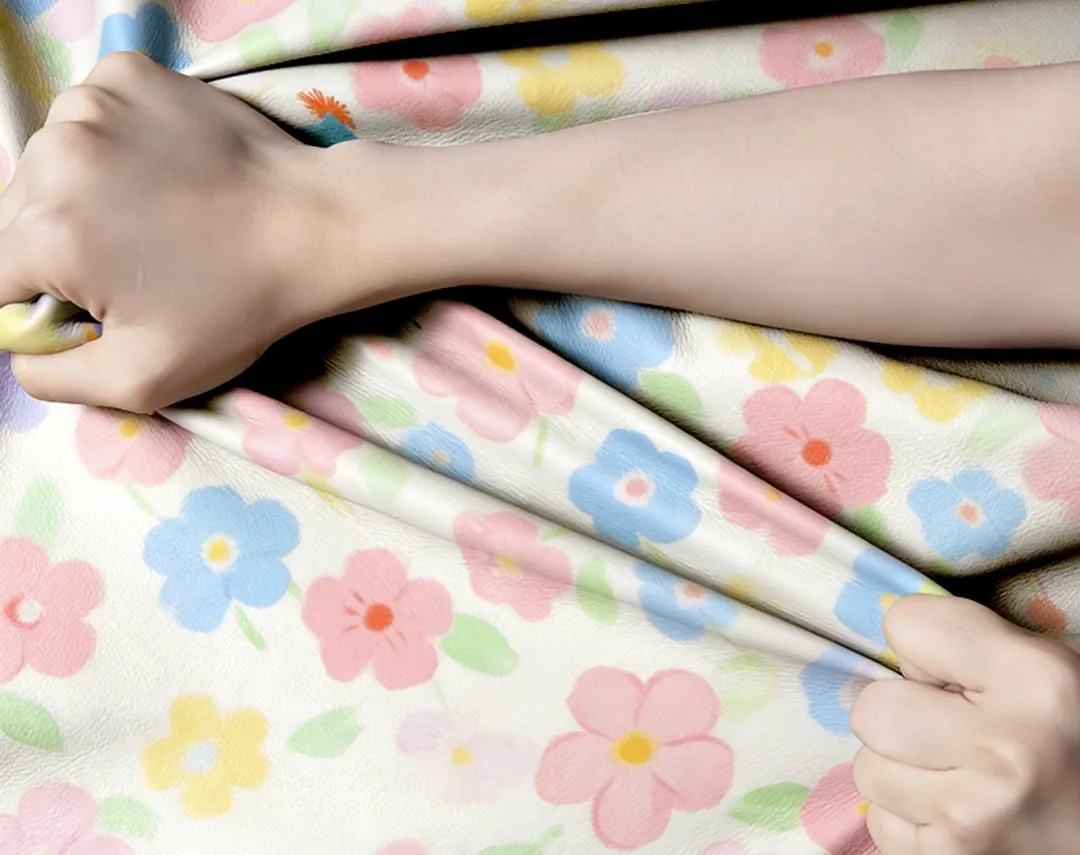
In comparison, eco solvent printing is more suitable for mass production of light-colored leather products.
For example:
- Light-colored floor mats
- Placemats
- PU desk mats
- Home leather products
Today’s specialized eco solvent leather inks have already solved many traditional leather printing problems, including:
- Color migration
- Uneven gloss patterns
- Ink penetration inconsistency
As a result, printing quality is highly detailed with smooth gradients, making it suitable for continuous industrial production.
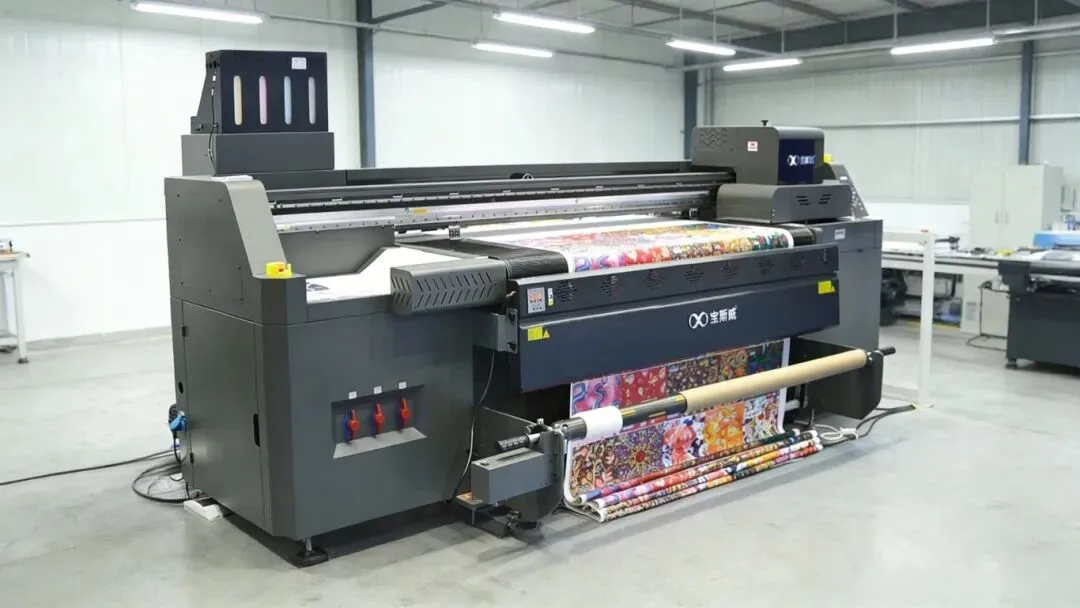
In terms of speed, a 16-head eco solvent conveyor printer can achieve production capacities exceeding 200㎡/h.
Combined with a jumbo roll feeding and take-up system, a single operator can even manage multiple machines at the same time.
For factories handling stable, high-volume leather orders, the overall production efficiency can be extremely impressive.
Environmental Performance & Odor: Eco Solvent Is Lighter, UV Requires Ventilation
Environmental standards and odor control are also major concerns for many leather factories.
Especially in products such as:
- Automotive interiors
- Bags and luggage
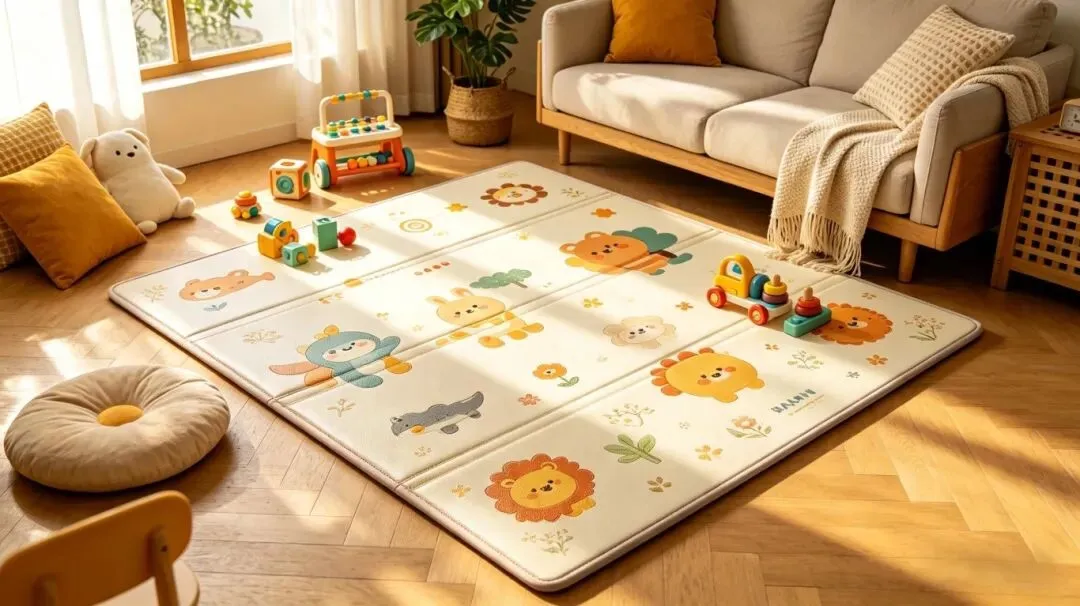
- Children’s seat cushions
- Home leather products
Many customers have strict odor acceptance requirements.
After proper drying, eco solvent environmentally friendly inks produce finished products with almost no noticeable odor.
For odor-sensitive applications, eco solvent solutions are therefore easier to pass customer inspections.
UV printing, on the other hand, may retain a certain level of odor immediately after printing.
Although the smell usually decreases significantly after ventilation, for projects with especially strict odor requirements, sample testing is highly recommended before mass production.
Low-Temperature Flexibility: UV Needs Testing in Cold Conditions, While Eco Solvent Remains More Flexible
Under normal temperatures, UV printing already offers relatively good flexibility.
In most cases, regular bending and stretching can be handled without problems.
However, in low-temperature environments — especially in colder northern regions — the situation can change.
For example:
- Folding pressure during transportation
- Large-angle bending
- Long-term cold storage
These conditions may cause cracks to appear in the UV ink layer on the surface.
Therefore, for orders requiring high crack resistance and flexibility, low-temperature bending tests are recommended before choosing UV printing.
Eco solvent printing works differently.
Its ink penetrates into the leather itself, creating a more integrated bond with the substrate.
Even under repeated bending and stretching in low-temperature environments, the leather can still maintain its original flexibility.
As long as the leather itself does not crack, the printed graphics usually remain intact as well.
This is one of the key reasons why many leather factories in colder regions prefer eco solvent solutions.
So, Which One Should You Choose?
If your products are mainly:
- Light-colored floor mats
- Desk mats
- PU leather products
- Large-volume continuous orders
Then eco solvent printing is likely the more stable and cost-effective choice.
If your orders focus more on:
- Multi-color leather products
- Personalized customization
- Fast e-commerce orders
- Quick delivery
- Special surface effects
Then UV printing may offer greater advantages.
Final Thoughts
In reality, there is no absolute answer to whether UV printing or eco solvent printing is “better.”
What truly matters is your product type, order structure, customer requirements, and investment budget.
We hope this comparison helps you narrow down the right direction for your leather printing business.
If you’re still unsure which solution is more suitable for your leather products, feel free to contact Baosiwei.
We can help match the right digital printing solution based on your:
- Leather materials
- Product applications
- Order structure
- Budget requirements
Helping you avoid unnecessary trial and error while choosing the most suitable equipment solution.