
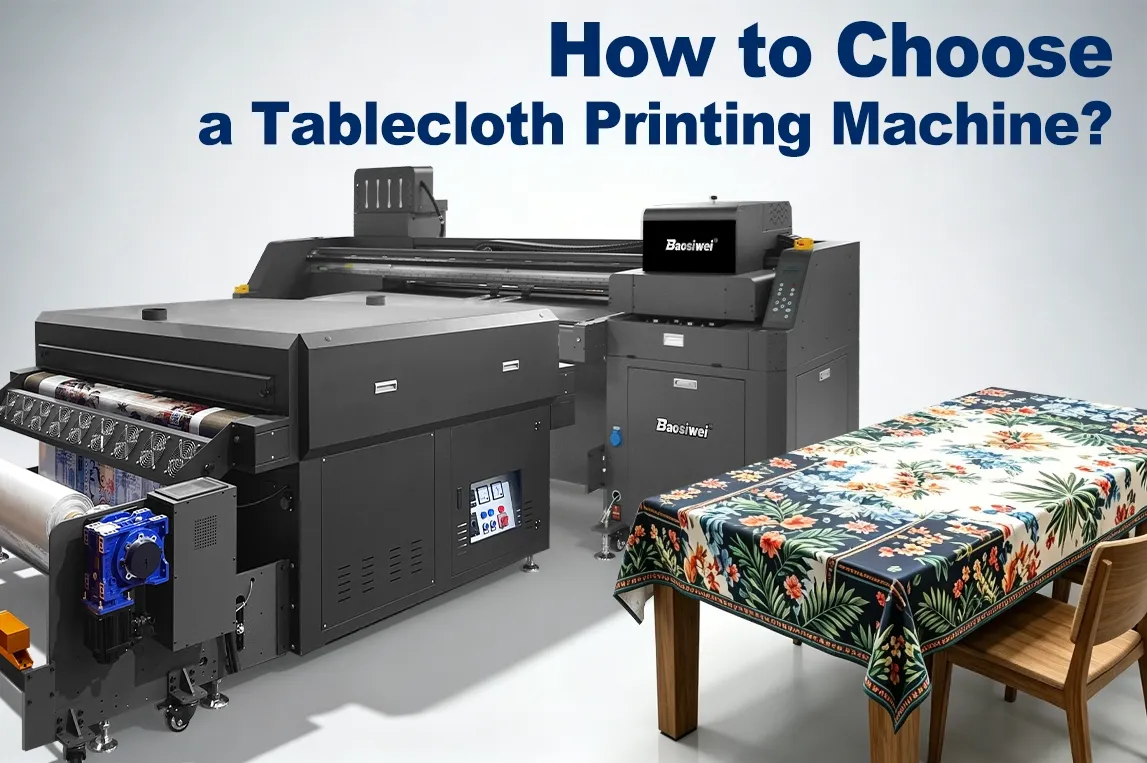
How to Choose a Tablecloth Printing Machine? UV Printing, Eco-Solvent, and PET Film Transfer Explained in One Article
How to Choose a Tablecloth Printing Machine? UV Printing, Eco-Solvent, and PET Film Transfer Explained in One Article
What is the best way to choose a tablecloth printing machine?
The best tablecloth printing machine depends on your production type, material compatibility, and order structure.
UV printing is suitable for fast and small-batch orders, eco-solvent printing is widely used for stable and flexible mass production, while PET film transfer printing is mainly used for high-value and premium tablecloth production.
Manufacturers usually choose based on three factors: production speed, fabric type, and final product positioning rather than machine price alone.
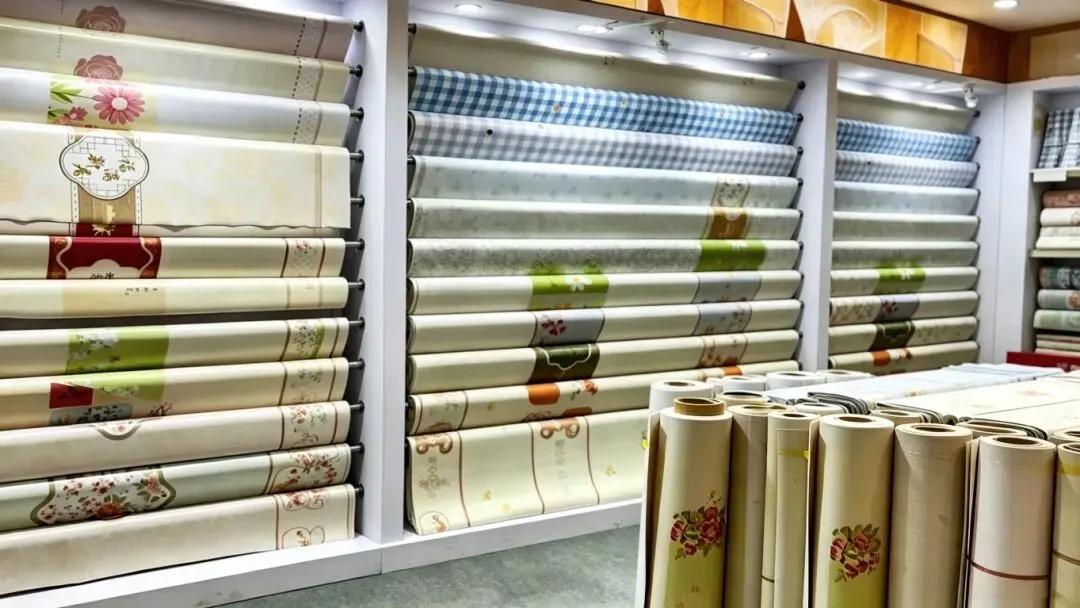
01|PET Film Transfer: Suitable for High-Value Tablecloth Production
If the goal is to create high-value tablecloths and increase product pricing, PET film transfer is an ideal solution. It is typically paired with the BSW-S1916-E PET film printing machine, suitable for high-end and functional mass production.
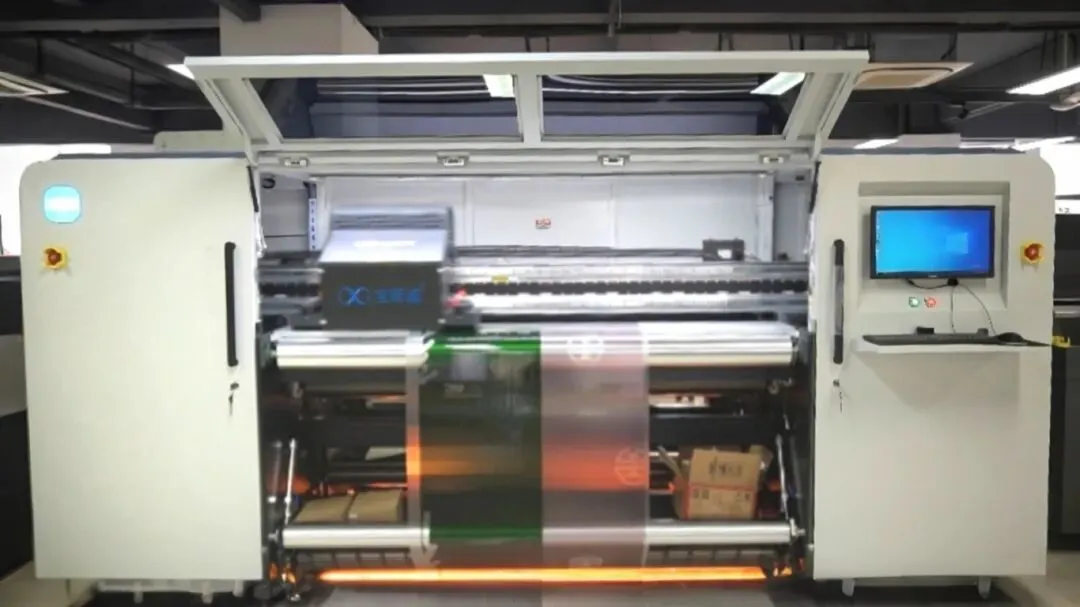
Excellent image detail performance
This process follows the logic of “printing on PET film first, then transferring.”
Based on PET as a standard printing medium, the printing precision and color gradation can be pushed to an extreme level. Fine patterns and gradient designs are reproduced clearly.
Compared with direct printing methods, the finished product has a more premium texture, making it easier to create market differentiation. It is suitable for home luxury products and commercial high-end customization scenarios.
Eco-friendly and odorless, meeting high-end market standards
It uses dedicated eco-friendly ink. The finished product is odorless, meeting strict environmental requirements for home textiles, high-end hotels, and restaurants.
Excellent physical performance: waterproof, oil-proof, and scratch-resistant
Ink penetrates deeply into the fabric fibers, providing strong adhesion. The design will not peel off even after repeated scratching or pulling.
At the same time, it achieves waterproof, oil-proof, and scratch-resistant functions. It can handle daily kitchen stains in households, and also high-frequency cleaning scenarios in restaurants, significantly improving product durability and market competitiveness.
Equipment configuration: BSW-S1916-E PET film printer
The BSW-S1916-E PET film printer is equipped with 16 i3200 printheads and a rubber roller feeding system, ensuring stable material feeding.
Hourly production capacity can reach 200–300㎡, supporting both large-scale stable production and fast sampling, efficiently matching high-end order iteration needs.
02|UV Printing: Fast Response, Suitable for Urgent Orders
Simplified process, significantly shorter delivery cycle
No plate making is required. Print directly from the file, and the product can be delivered immediately after printing. No additional fixing process is needed.
It greatly shortens production time and is suitable for fast-paced production demands, small batch orders, and new product testing.
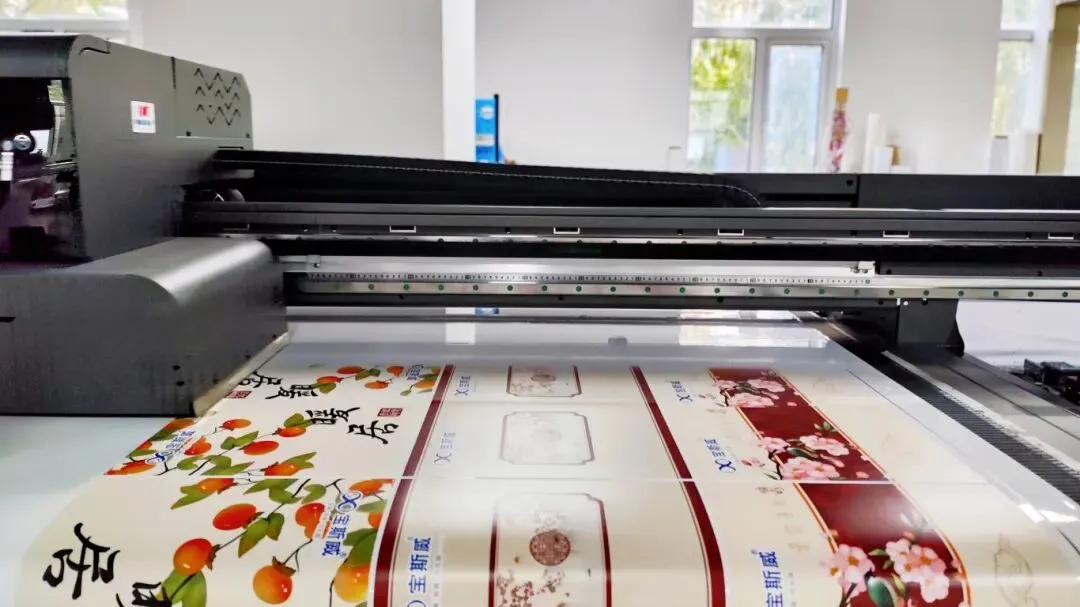
Process upgrade: improved performance in low-temperature cracking issues
In response to common industry issues such as fabric hardening and design cracking during low-temperature transportation and daily use in autumn and winter, Baosiwei’s upgraded UV printing solution significantly improves low-temperature resistance.
It effectively avoids quality problems and reduces after-sales losses, ensuring stable production quality.
03|Eco-Solvent: Flexible production capacity and wide application scenarios
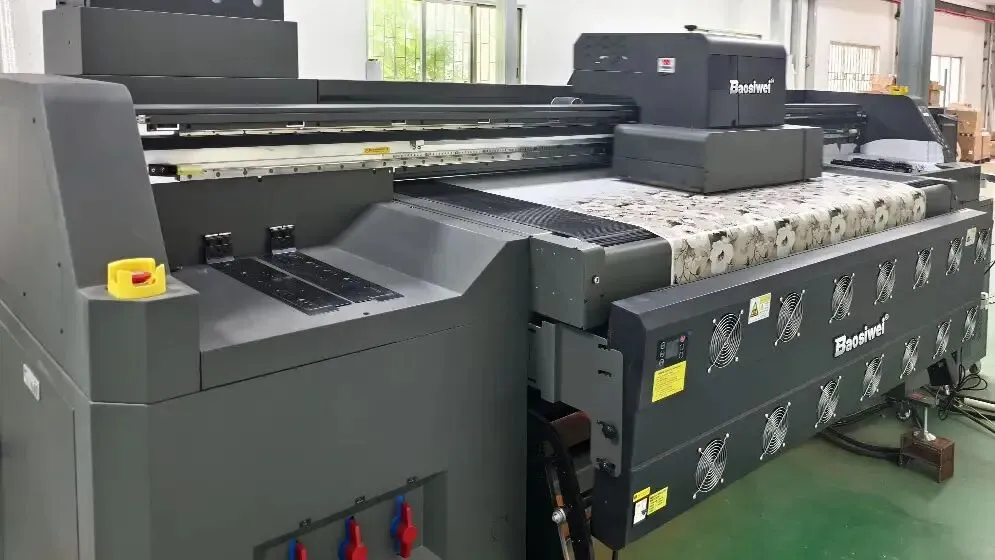
For balanced and stable mass production, while also handling different fabrics and various order sizes, eco-solvent printing offers stronger versatility and is considered a general-purpose production solution suitable for multiple manufacturing needs.
Wide fabric compatibility
It can be directly printed on PVC, woven fabric, leather, and other light-colored tablecloth materials, covering most mainstream tablecloth types.
Low-temperature flexibility and eco-friendly low odor
Using dedicated tablecloth ink, the ink penetrates into the fabric fibers. The design has good elasticity and will not easily crack under repeated folding or low-temperature conditions.
The finished product has no strong odor and meets home textile environmental standards, making it suitable for long-term continuous production.
Flexible production capacity
Depending on requirements, JW-1908 or JW-1916 eco-solvent mesh belt printers can be selected.
Hourly production capacity can reach 100–280㎡. It can handle both small trial orders and large-scale continuous production, offering strong production flexibility.
Comparison of the Three Main Printing Processes
| Comparison | UV Printing | 8/16-head Eco-Solvent Printing | 16-head PET Film Transfer |
|---|---|---|---|
| Core positioning | Fast response, urgent orders | Flexible mass production | High-value home & hotel tablecloth production |
| Working principle | UV curing forms design instantly | Ink forms pattern on surface | Print on PET film then heat transfer |
| Image quality | Stable performance | Even and soft color | Extremely high detail reproduction |
| Durability & function | Instant drying, fast delivery | Good folding resistance, anti-crack | Strong adhesion, waterproof, oil-proof, scratch-resistant |
| Odor & environmental | Slight odor after printing | Low odor, suitable for home & catering use | Odor-free, preferred for high-end scenarios |
| Production capacity | Fast delivery orders | 100–258㎡/h, suitable for all order sizes | 150–220㎡/h, balanced production and sampling |
| Market application | Home urgent orders, restaurant replenishment | Standard home tablecloths, bulk restaurant orders | High-end home use, hotel commercial customization |
If you are still unsure about equipment selection, feel free to contact Baosiwei. We will evaluate your actual production situation and match a suitable equipment solution to help you avoid investment mistakes.