
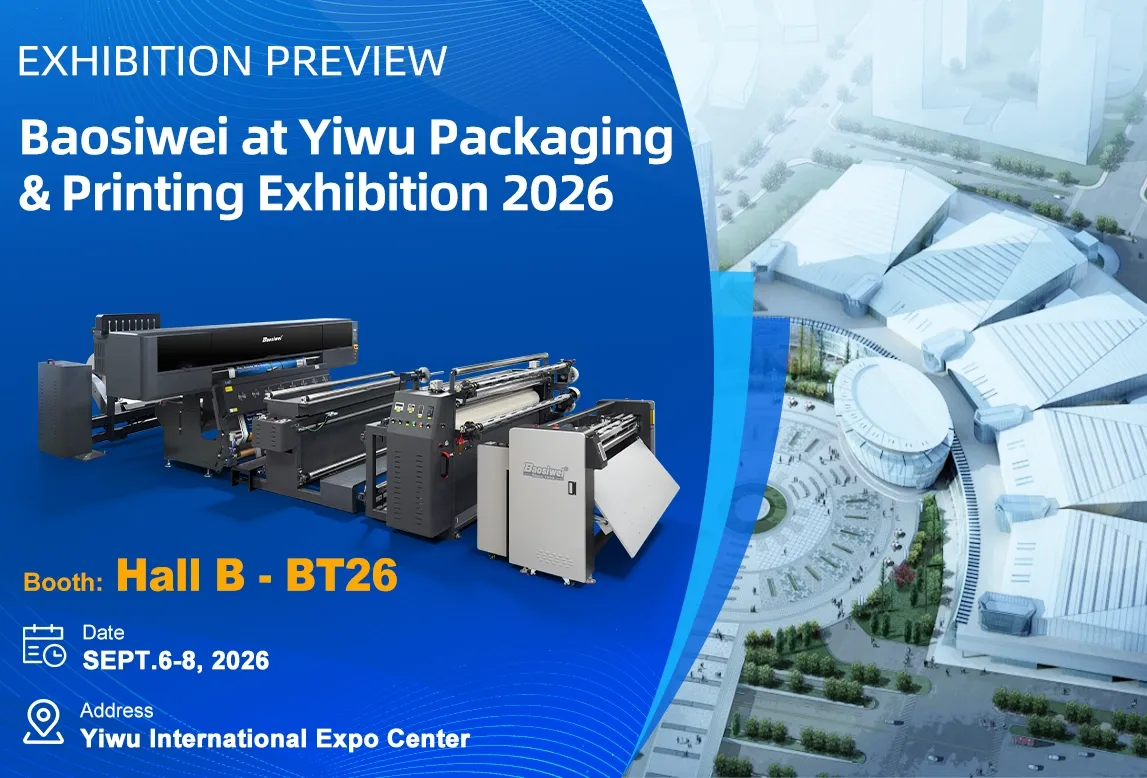
Exhibition Preview: Baosiwei to Showcase a Digital Printing Solution for Small-Batch Packaging at Yiwu Packaging & Printing Exhibition 2026
Exhibition Preview: Baosiwei to Showcase a Digital Printing Solution for Small-Batch Packaging at Yiwu Packaging & Printing Exhibition 2026
Packaging orders are becoming increasingly fragmented. More brands are asking for short runs, faster turnaround times, more SKUs, and customized packaging, creating a production challenge for many traditional printing companies.
Large-volume orders can still be handled efficiently with conventional offset printing. The problem often starts when an order drops to a few hundred or around 1,000 pieces. Plate making, setup, makeready, changeovers, and labor costs do not disappear simply because the order is smaller.
So how can packaging manufacturers produce short-run orders without making the process unnecessarily expensive or time-consuming?
From September 6–8, 2026, Baosiwei will showcase an upgraded 16-head digital packaging printing line with inline lamination and cutting at the Yiwu International Expo Centre, Booth BT26 in Hall B.
The system is designed around a practical production requirement: helping packaging manufacturers handle small-batch, short-lead-time, and frequently changing orders more efficiently.
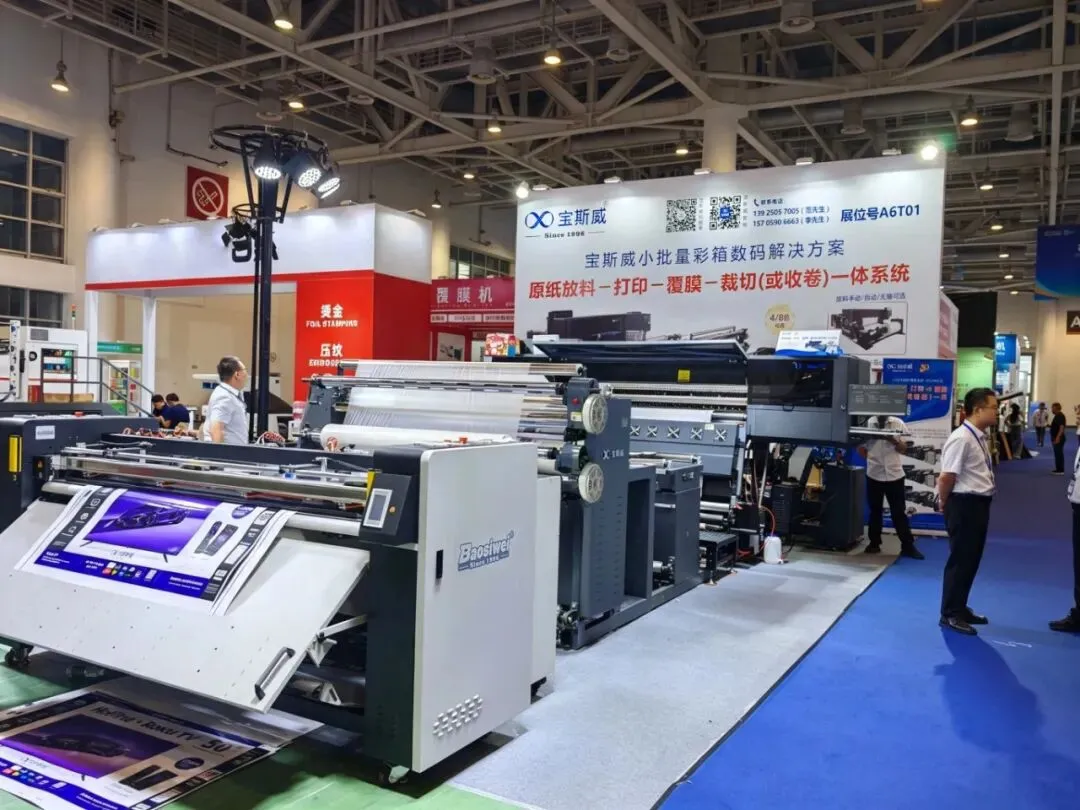
Why Are Small-Batch Packaging Orders Difficult to Produce with Conventional Printing?
Traditional packaging production is highly efficient when the order volume is large enough to spread setup and preparation costs across thousands or tens of thousands of pieces.
Small orders are different.
A packaging factory may receive an order for only a few hundred boxes, but the production process can still involve plate making, machine setup, color adjustment, printing, finishing, and cutting.
The result is a common problem:
The factory can produce the order, but the production process may not be economically attractive.
Small-batch packaging orders also tend to come with several additional requirements:
- More SKUs and artwork variations
- Smaller order quantities
- More frequent job changes
- Shorter delivery windows
- More customized designs
- Lower tolerance for minimum order quantities
- Greater demand for quick sampling and production
This is why some packaging manufacturers are comfortable with large-volume contracts but are less willing to take on hundreds of small orders.
The issue is not necessarily the order itself. It is whether the production method matches the order structure.
For factories that already operate offset printing equipment, the practical answer does not have to be replacing the existing production line. A digital packaging printing system can work alongside conventional equipment, allowing each type of order to use a more suitable production method.
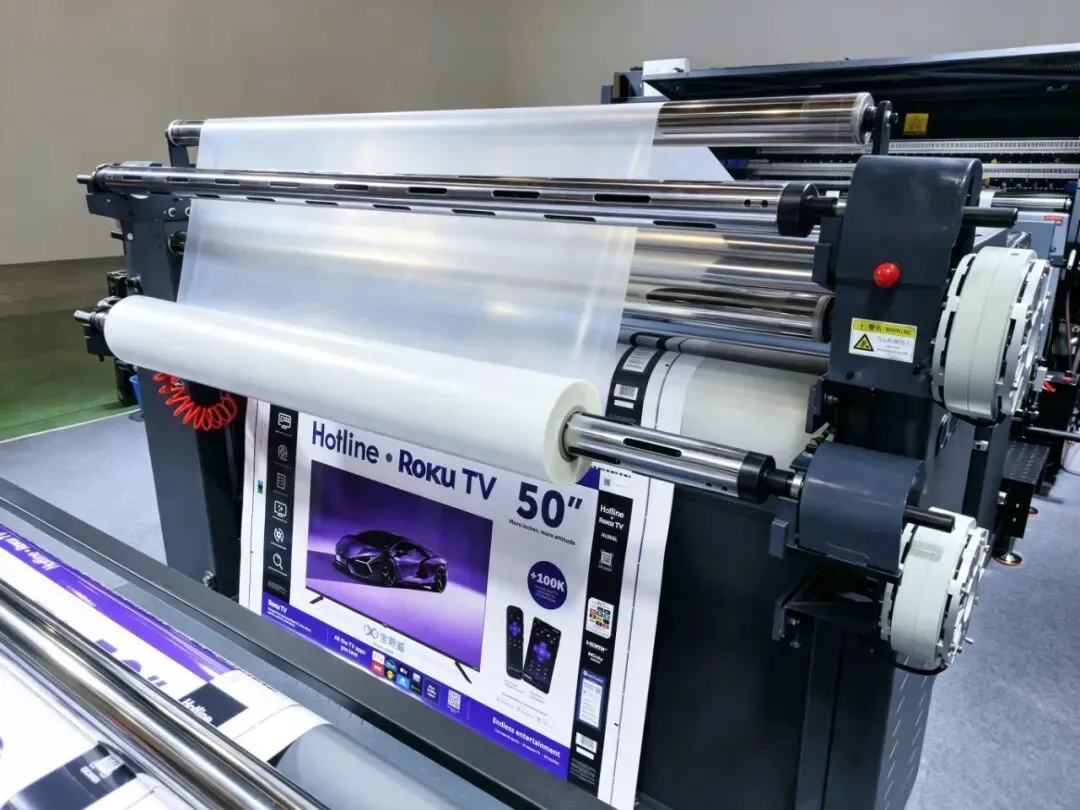
One Production Line from Roll Feeding to Printed, Laminated and Cut Output
To address the production challenges of short-run packaging, Baosiwei's system integrates several processes into one production workflow:
Paper Roll Feeding → Digital Printing → Lamination → Cutting → Finished Output
Instead of moving materials between separate machines and relying on manual handoffs, the integrated line connects multiple production stages.
This can be particularly useful when a factory is dealing with frequent job changes and relatively small quantities.
Reducing Setup Work for Short-Run Packaging
Conventional printing normally requires plates and preparation work when the artwork changes.
For large-volume production, those preparation costs can be distributed across a large number of finished products.
For a small order, the economics are different.
Digital printing works directly from digital artwork, eliminating the traditional plate-making step.
The basic workflow becomes:
Artwork preparation → Digital file setup → Production
This makes digital printing suitable for applications where packaging manufacturers need to switch between different designs more frequently.
For a factory handling short runs, urgent orders, or customized packaging, reducing setup work can be just as important as increasing printer speed.
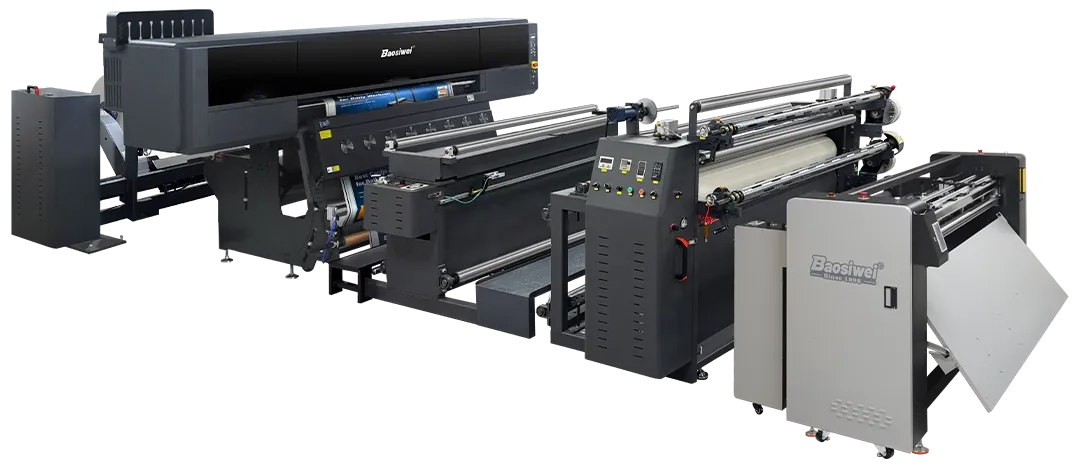
Industrial-Level Production Quality, Not Just a Proofing Machine
Small-batch production does not mean customers are willing to accept lower print quality.
In many cases, short-run packaging is produced for customized products, promotional campaigns, seasonal products, or emerging brands. These applications still require sharp graphics, accurate color reproduction, and consistent finishing.
For this reason, a digital packaging printer needs to be evaluated as a production machine, not simply as a sampling device.
Digital Printing: Fine Details and Color Reproduction
Baosiwei's 16-head system is designed for industrial production environments.
During printing, small text and fine graphic elements need to remain sharp, while the edges of printed patterns should avoid noticeable softness.
Certain colors, including purple and other challenging color ranges, also require appropriate color management and printing parameters to achieve consistent reproduction.
This becomes increasingly important when a packaging factory handles multiple SKUs.
If every job change requires extensive manual color adjustment, the time saved by digital printing can quickly be lost during setup.
Lamination: Consistent Surface Finishing
After printing, the packaging material enters the lamination process.
Lamination quality directly affects the appearance of the finished packaging.
The system has been optimized for stable inline lamination, helping reduce common surface issues such as bubbles, wrinkles, and uneven visual effects under normal production conditions.
A stable lamination process also helps prepare the material for the next stage: cutting.
Cutting: Accuracy Matters Beyond Dimensions
Cutting accuracy is especially important for packaging applications.
A small deviation in the cutting position can affect folding, forming, and final assembly.
After multiple rounds of optimization, the system can achieve a cutting accuracy of up to 0.5 mm, with clean cutting edges and reduced burrs and paper debris.
For short-run packaging production, the objective is therefore not simply to make the printer faster.
The more important question is whether printing, lamination, and cutting can operate together as a stable production workflow.
Up to 200 m²/h: Short Runs Still Need Production Efficiency
When evaluating a digital packaging printing machine, manufacturers often start with one question:
Is it suitable for small orders?
There is another question that is just as important:
What happens when the number of small orders increases?
Small-batch production does not necessarily mean low productivity.
A packaging factory may receive dozens of different short-run orders in the same period. If each order takes too long to produce, the factory can still face production backlogs and delayed deliveries.
The Baosiwei 16-head model can reach a production capacity of up to 200 m²/h, providing higher throughput for short-run packaging production while maintaining the required print quality.
The system also uses an industrial roll-feeding system designed to handle paper rolls weighing up to 2 tons.
For packaging manufacturers, this addresses an often-overlooked part of production efficiency: material handling.
Heavy paper rolls can make manual loading and unloading time-consuming. A more practical feeding system can reduce downtime between production runs and support longer continuous operation.
In real factory production, delivery efficiency depends on more than printer speed.
It is influenced by:
Material loading + printing speed + lamination + cutting + job changeover time
A digital packaging production line needs to address all of these stages if it is expected to improve short-run order fulfillment.
Are Digital Printing Machines Suitable for Packaging Orders Below 1,000 Pieces?
There is no universal order quantity at which digital printing suddenly becomes the better choice.
The right production method depends on factors such as packaging size, artwork variation, substrate, turnaround time, finishing requirements, and the factory's existing equipment.
However, digital printing becomes particularly relevant when orders have characteristics such as:
- Low or medium quantities
- Multiple SKUs
- Frequent artwork changes
- Short delivery times
- Customized packaging requirements
- High changeover frequency
- A need to avoid traditional plate-making costs
Baosiwei's system is optimized for small-batch orders of fewer than 1,000 pieces, but the actual economic crossover point should always be evaluated according to the specific product and production conditions.
The goal is not to replace conventional offset printing.
Instead, digital printing can complement an existing packaging production setup:
Large-volume orders → Conventional offset printing
Short-run orders → Digital printing
Urgent or customized orders → Digital printing
This hybrid production model allows a packaging factory to keep using its conventional equipment where it is most productive while adding a more flexible option for orders that are less suitable for traditional production.
See the Complete Small-Batch Packaging Production Process at Yiwu 2026
At the 2026 Yiwu Packaging & Printing Exhibition, Baosiwei will demonstrate the equipment in operation rather than simply displaying the machine.
Visitors will be able to see the complete workflow:
Paper Roll Feeding → Digital Printing → Lamination → Cutting → Finished Output
The demonstration will focus on practical production questions, including:
- How quickly can different short-run jobs be switched?
- How does digital printing reduce traditional setup work?
- Can printed packaging material move directly into inline lamination?
- How is cutting accuracy maintained?
- How stable is the equipment during continuous production?
- How does a production capacity of up to 200 m²/h fit into a packaging factory's workflow?
- How can digital printing complement existing offset equipment?
These questions are often more useful for equipment selection than comparing printer speed alone.
If your factory is considering adding digital printing capacity for small-batch packaging, the exhibition is an opportunity to see the complete process and discuss your actual production requirements with the Baosiwei technical team.
Exhibition Information
Date: September 6–8, 2026
Venue: Yiwu International Expo Centre
Baosiwei Booth: Hall B, BT26
Packaging manufacturers, folding carton producers, paper packaging companies, and printing businesses exploring digital packaging production are welcome to visit the booth.
If you have a specific packaging material, product, or artwork that you are considering for digital production, bringing a sample or digital file can also make the technical discussion more practical.
FAQ
1. Is digital printing suitable for small-batch packaging?
Yes. Digital printing is particularly useful for packaging orders with relatively low quantities, multiple SKUs, frequent artwork changes, or short delivery times. It can reduce traditional plate-making and changeover requirements.
2. Can digital printing be used for packaging orders below 1,000 pieces?
Yes. Orders below 1,000 pieces can be suitable for digital production, although the most economical production method depends on the packaging size, substrate, artwork, finishing requirements, and delivery schedule.
3. Can a digital packaging printer replace an offset printing press?
Not necessarily. Offset printing remains highly effective for large-volume production. Digital printing can instead complement offset equipment by handling short runs, urgent orders, customized packaging, and jobs with frequent artwork changes.
4. What is the production speed of the Baosiwei 16-head packaging printer?
The 16-head model can reach a production capacity of up to 200 m²/h. Actual output can vary depending on the substrate, print mode, artwork coverage, and downstream finishing requirements.
5. Can the system operate continuously?
The equipment is designed for industrial production and supports 24-hour continuous operation under appropriate operating and maintenance conditions.
6. How much paper can the roll-feeding system handle?
The industrial roll-feeding system can handle paper rolls weighing up to approximately 2 tons, supporting continuous packaging production and reducing the need for frequent manual material handling.
7. What cutting accuracy can the system achieve?
After multiple rounds of optimization, the cutting accuracy can reach up to 0.5 mm. Actual cutting performance may vary depending on the material condition, machine settings, and production environment.
8. How do I know whether my packaging orders are suitable for digital printing?
Start by evaluating order quantity, number of SKUs, artwork changes, turnaround time, substrate, and existing production capacity. If your factory regularly faces high setup costs for small orders, slow changeovers, urgent delivery requirements, or low-volume customized packaging, digital printing may be worth evaluating.
Conclusion
Packaging production is becoming more fragmented, but the answer is not necessarily to choose digital printing instead of conventional printing.
A more practical approach is to match the production method to the order.
Large-volume jobs can continue to use the scale advantages of conventional printing, while short-run, urgent, and customized orders can be handled through digital printing.
For packaging manufacturers that already operate offset equipment, this complementary production model can provide additional flexibility without requiring the factory to completely change its existing production workflow.
From September 6–8, 2026, Baosiwei will demonstrate its 16-head digital packaging printing, lamination, and cutting system at Hall B, Booth BT26, Yiwu International Expo Centre.
If you are evaluating a digital printing machine for small-batch packaging production, visit Baosiwei at the exhibition to discuss your materials, packaging formats, order quantities, and production requirements with the technical team.