How Packaging Print Shops Can Increase Profits with Small-Batch Digital Printing
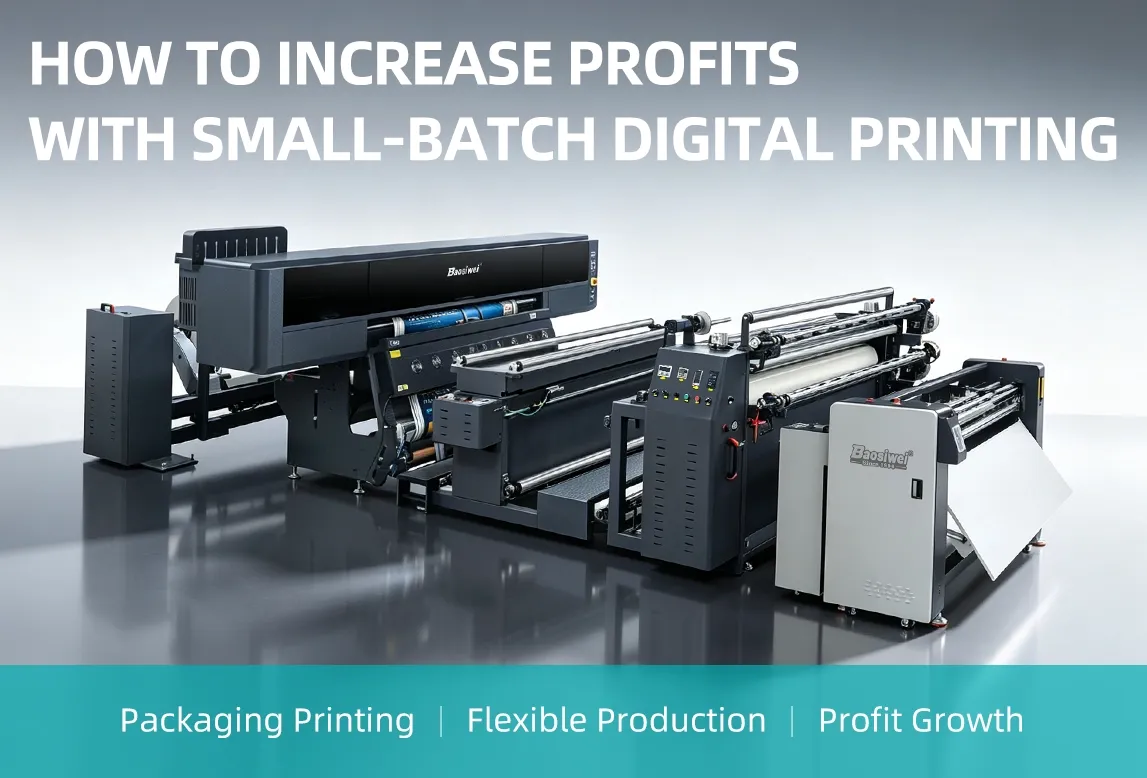
How Packaging Print Shops Can Increase Profits with Small-Batch Digital Printing
Where Is the Next Profit Opportunity for Packaging Print Shops?
For many years, packaging print shops have relied on high-volume production as their primary source of revenue. Conventional offset printing remains the preferred solution for folding cartons, gift boxes, and corrugated packaging because of its low unit cost and high production efficiency.
However, the packaging market is changing.
Today, more brands are launching new products, seasonal campaigns, limited editions, regional promotions, and co-branded collections. As a result, packaging requirements are no longer defined only by large order volumes. Instead, businesses increasingly need packaging that can be produced quickly, updated frequently, and delivered in smaller quantities.
For packaging print shops, this shift represents more than just a new type of order—it represents a new profit opportunity.
Small-batch digital printing is not designed to compete with traditional offset printing on large production runs. Instead, it enables print shops to serve an emerging value-added market by producing short-run packaging orders ranging from 50 to 1,000 pieces, creating additional revenue through flexible manufacturing and responsive supply chain services.
Why Is Small-Batch Packaging Becoming a Growing Market Demand?
For today's brands, packaging is no longer just a protective container. It has become an essential part of product marketing, brand identity, and customer experience.
A product launch may require several packaging concepts before mass production. Seasonal campaigns often need limited-edition packaging. Different markets may require localized artwork, while e-commerce businesses frequently develop customized packaging for different product combinations.
These changing requirements have created growing demand for packaging that can be updated quickly rather than produced in tens of thousands of units at a time.
Typical customers for small-batch packaging include:
- Manufacturers launching new product packaging
- Brand owners testing different packaging concepts before mass production
- Amazon and Shopify sellers developing branded packaging
- Coffee shops, pizza restaurants, bakeries, and other food-service businesses introducing seasonal packaging
- Brands producing limited-edition gift packaging or collaborative product collections
- Marketing agencies creating promotional packaging for product launches and branding campaigns
Most of these customers only require 50 to 1,000 folding cartons, gift boxes, shipping boxes, takeaway boxes, or other custom packaging products, but they place a much higher value on fast turnaround, design flexibility, and consistent print quality.
For conventional printing, these orders are often difficult to accept because of minimum order quantity requirements, plate-making costs, and lengthy production preparation. Digital printing effectively fills this gap by making economically viable short-run production possible.
The Real Profit Comes from Flexible Supply Chain Capability, Not Order Volume
One of the most common questions packaging print shop owners ask is:
"Can a few hundred boxes really generate meaningful profits?"
The answer depends on how you position your business.
Small-batch digital printing is not a volume-driven business model. Its value lies in providing a flexible packaging supply chain that solves problems traditional production methods often cannot.
With conventional printing, handling multiple SKUs, frequent artwork revisions, or rapid order changes usually requires new printing plates, additional machine setup, and longer production lead times. Every revision increases cost and reduces production efficiency.
Digital printing changes that equation.
It allows packaging manufacturers to:
Print directly without plate making- Switch between different artwork versions within minutes
- Produce multiple SKUs in the same production run
- Respond quickly to customer design revisions
- Reduce inventory pressure and working capital requirements
For brand owners, the real value is not simply purchasing printed packaging. They are investing in a supply partner capable of responding quickly to changing market demands.
This is why small-batch packaging projects often command a higher service premium than conventional high-volume printing. Customers are not paying more simply because the packaging is digitally printed—they are paying for speed, flexibility, and reduced business risk.
In other words, the real profit doesn't come from producing more boxes. It comes from building a flexible supply chain that customers are willing to pay a premium for.
Why Does Small-Batch Packaging Offer Higher Profit Margins?
Traditional packaging print shops often set relatively high minimum order quantities to keep production costs under control. As a result, a large number of short-run packaging projects remain underserved.
Many small and medium-sized brands simply don't need thousands—or even tens of thousands—of boxes. Their actual demand is often only a few dozen to a few hundred customized packages, making conventional printing difficult to justify both economically and operationally.
For packaging print shops equipped with digital printing technology, this market presents a valuable business opportunity.
Small-batch packaging projects typically offer several advantages:
- No plate-making costs
- Fast job changeovers with minimal material waste
- The ability to process multiple short-run orders simultaneously
- Higher service premiums for customized packaging
- Stronger overall profit margins than standard print-for-processing jobs
The premium customers are willing to pay is not for digital printing itself. It comes from the ability to deliver customized packaging in small quantities, within shorter lead times, and with the flexibility to adapt designs whenever needed.
For packaging print shops, the real business value is no longer just printing boxes—it is providing a flexible supply chain service that helps customers bring products to market faster.
Focus on a Niche Instead of Trying to Serve Every Market
Expanding into small-batch packaging does not mean accepting every order that comes your way.
In practice, many successful packaging print shops build their competitive advantage by focusing on one or two specific market segments rather than attempting to serve every industry.
For example:
- Pizza box packaging
- Paper shopping bags
- Home appliance packaging cartons
- Furniture packaging
- Cosmetic packaging
- Gift boxes
By specializing in selected packaging applications, print shops can gradually establish standardized products, pricing structures, production workflows, and delivery processes.
As experience grows, operations become more efficient, quality becomes more consistent, and customer trust becomes easier to build. This often leads to repeat orders and long-term business relationships.
In the small-batch packaging market, specialization and standardization are often far more valuable than offering the widest possible product range.
Small-Batch Digital Printing Is More Than a Production Method—It's a Business Model
Digital printing is not intended to replace conventional offset printing.
Offset printing remains the most cost-effective solution for high-volume production. Digital printing, on the other hand, complements traditional manufacturing by serving orders that require shorter lead times, multiple artwork versions, and lower order quantities.
As more brands adopt faster product launches, regional marketing campaigns, seasonal promotions, and customized packaging strategies, demand for short-run packaging is expected to continue growing.
For packaging print shops, investing in digital printing is not simply about adding another production technology. It is about creating a new business model built around flexibility, responsiveness, and value-added services.
The most profitable businesses in the future will not necessarily be those competing on the lowest price. They will be those capable of delivering customized packaging faster, adapting to customer requirements more efficiently, and providing flexible supply chain services that traditional production methods cannot match.
For packaging print shops, future competition will no longer be defined only by production capacity or equipment. It will increasingly depend on supply chain responsiveness. Companies that can efficiently handle small-batch, multi-version, and customized packaging orders will be in a stronger position to capture new growth opportunities and improve profitability.
Frequently Asked Questions
1. Who is small-batch digital packaging printing suitable for?
Small-batch packaging is ideal for home appliance manufacturers, furniture brands, consumer goods companies, Amazon and Shopify sellers, food-service businesses, and any company that requires customized packaging for new products, seasonal campaigns, or promotional activities.
2. What is the typical order quantity for small-batch packaging?
Most short-run packaging projects range from 50 to 1,000 pieces, making them suitable for product launches, market testing, seasonal promotions, limited editions, and regional marketing campaigns.
3. Why are more brands choosing digital printing for packaging?
Digital printing eliminates plate-making, allows multiple SKUs in a single production run, enables rapid artwork updates, and helps brands reduce inventory while bringing products to market more quickly.
4. Can digital printing replace offset printing?
Not entirely.
Offset printing remains the preferred solution for large-volume production, while digital printing is better suited for short-run, multi-version, and fast-turnaround packaging projects. The two technologies complement each other and together provide greater production flexibility.
5. How can a packaging print shop start a small-batch packaging business?
A practical approach is to begin by focusing on one or two niche packaging markets—such as coffee packaging, gift boxes, e-commerce packaging, or industry-specific cartons. Standardizing products, pricing, and production processes will help improve efficiency, build customer confidence, and generate repeat business.
Conclusion
As brand marketing continues to evolve, small-batch packaging has grown from a niche requirement into an increasingly important segment of the packaging industry.
For packaging print shops looking to improve profitability and expand their services, the value of digital printing goes far beyond faster production or eliminating plate-making. Its real advantage lies in enabling a flexible supply chain capable of meeting the growing demand for customized, short-run packaging.
By building standardized workflows around selected market segments and consistently delivering 50 to 1,000-piece packaging orders, packaging print shops can create a sustainable business model with stronger customer loyalty, higher-value services, and healthier profit margins.
Ultimately, success in small-batch packaging is not about producing more boxes. It is about helping customers respond faster to the market while positioning your business as a reliable, flexible packaging partner.
If you are planning to expand into small-batch packaging production, Baosiwei offers digital printing solutions designed for folding cartons, gift boxes, corrugated packaging, paper bags, and many other packaging applications. Our team can help you choose the right configuration based on your products, production capacity, and business goals, allowing you to capture more high-value packaging opportunities in today's rapidly changing market.