
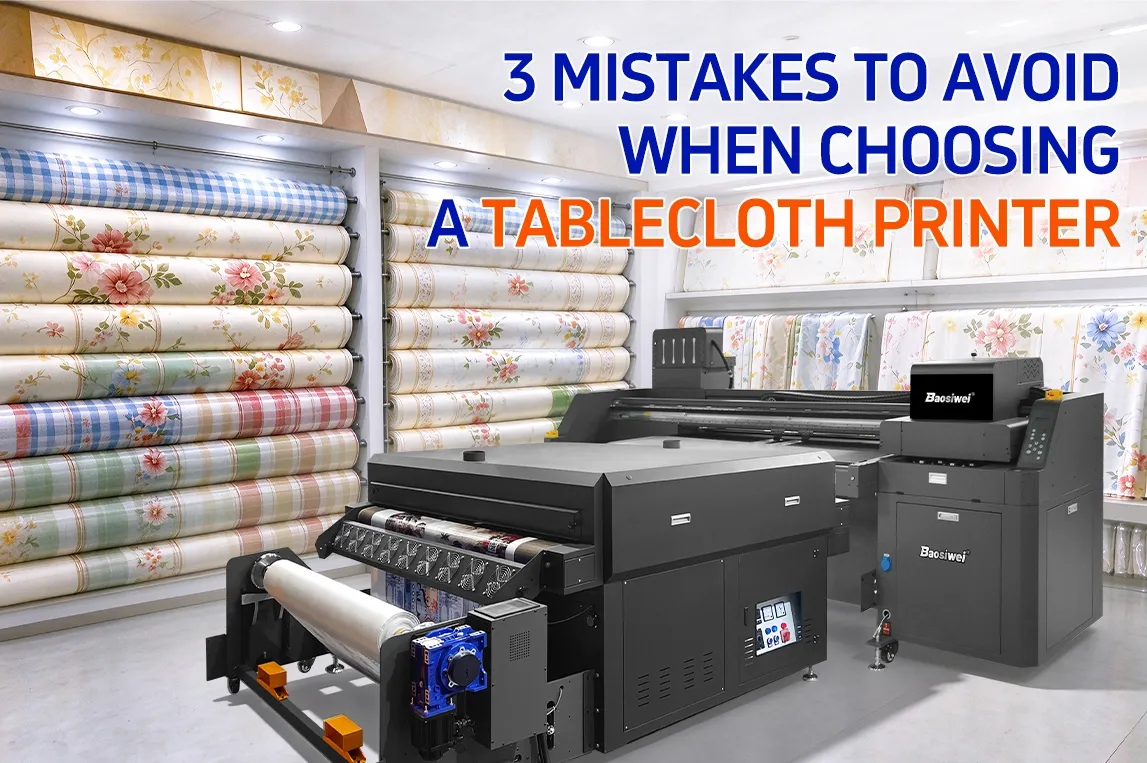
3 Mistakes to Avoid When Choosing a Tablecloth Printing Machine
3 Mistakes to Avoid When Choosing a Tablecloth Printing Machine
Buying a tablecloth printing machine before peak season can help a factory take on more orders, but choosing the wrong equipment can create problems just when production is busiest. A machine may look attractive on paper, yet struggle with the fabrics, production schedule, or finishing process used in your factory.
The biggest risks often come down to three things: choosing equipment without a proven application process, focusing on the purchase price instead of the full configuration, and overlooking after-sales support. Here is what tablecloth manufacturers should check before placing an order.
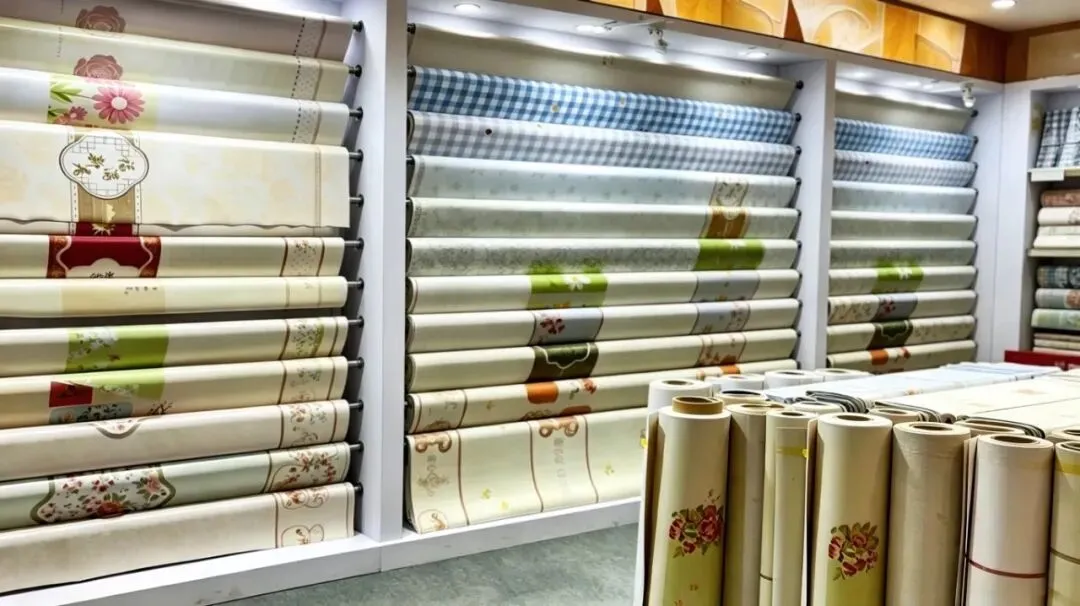
1. Choosing a Machine Without Testing Your Actual Materials
A printer that produces good results on one fabric may not perform the same way on another. Fabric composition, surface texture, ink compatibility, and the intended use of the finished tablecloth all affect the result.
This is why print speed and printhead specifications alone are not enough to judge whether a machine is suitable for your production.
Where problems start
Consider a factory that wants to expand its tablecloth range with more designs or different fabric types. The supplier demonstrates a clear print on a standard sample, but the factory's own material produces different colors or fails to meet the required durability.
The problem may lie in the printing process, ink system, transfer conditions, or finishing method rather than the printer hardware itself.
For example, dye sublimation is commonly used with suitable polyester fabrics and typically involves printing onto transfer paper before applying heat to transfer the design. Direct-to-fabric printing follows a different workflow. The appropriate method depends on the material and the requirements of the finished product.
If these details are not checked before purchase, the factory may need repeated trials and adjustments before production can begin. During peak season, that lost time can put delivery schedules under pressure.
What to check before buying
Ask the supplier to test the materials you actually plan to use. Review the finished samples for color reproduction, fine details, and application-specific durability. If the process involves heat transfer or other finishing steps, make sure these are included in the evaluation.
It is also worth keeping an approved sample and recording the process conditions used to produce it. This gives your production team a reference when checking quality during later runs.
The key question is not whether the machine can print a sample, but whether the complete process can produce the required result on your material.
2. Choosing the Lowest Price Without Checking the Full Configuration
A lower purchase price can be tempting, especially when a factory needs to increase capacity quickly. However, comparing machines by price alone can hide important differences in configuration and production capability.
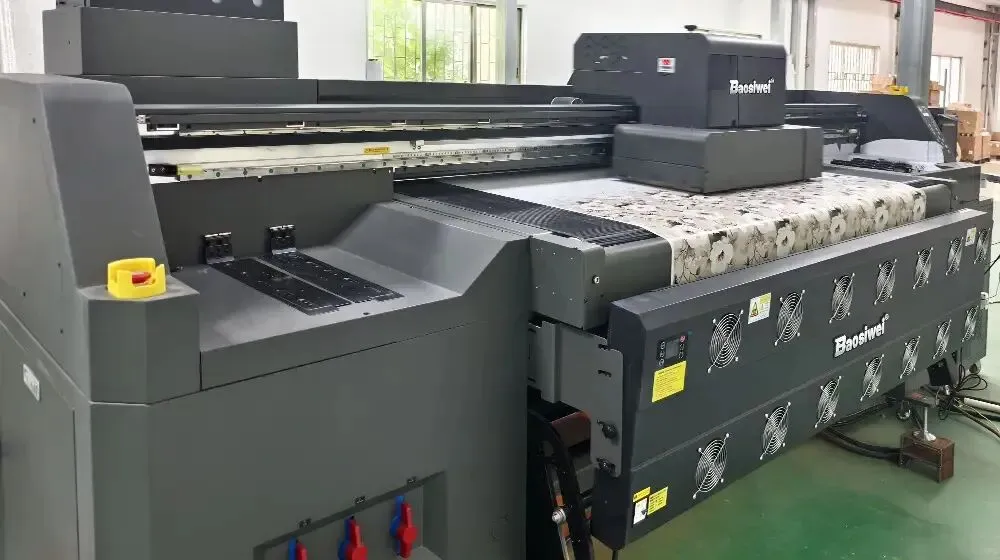
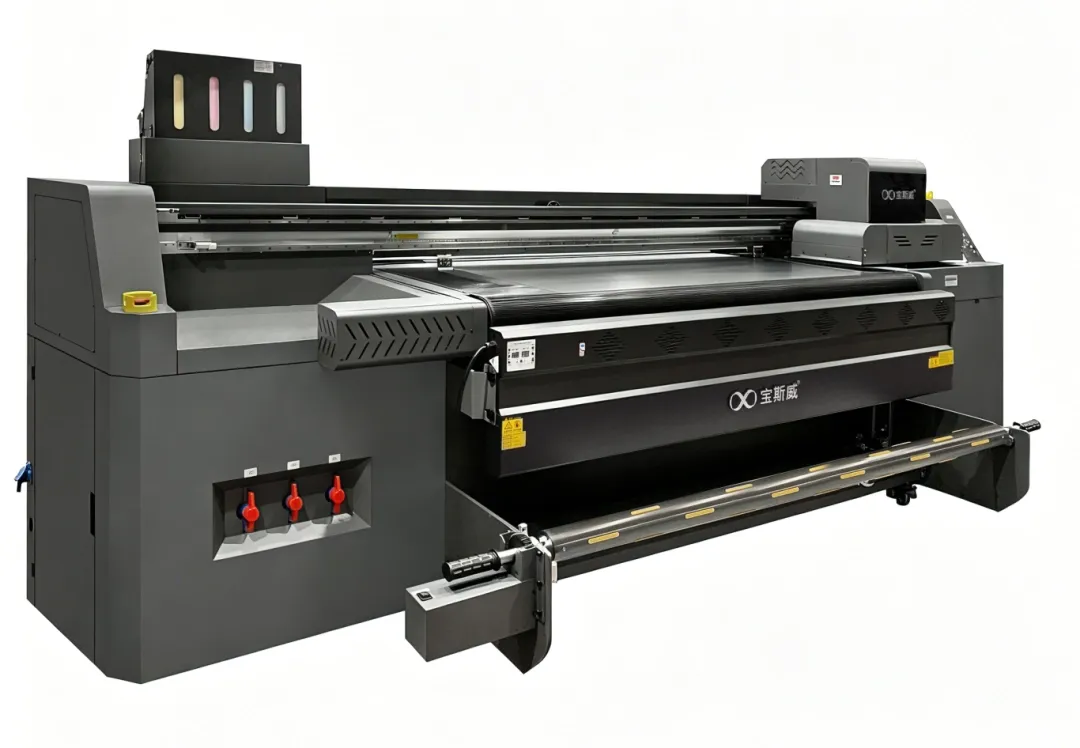
The printheads are only one part of a printing system. Depending on the application, material feeding, tension control, take-up equipment, drying systems, and compatibility with downstream processes can all affect daily production.
Why the difference becomes clearer during production
A short demonstration may not reveal problems that appear during longer runs. If fabric or transfer paper feeds inconsistently, operators may need to stop the machine to correct alignment or adjust material tension. Frequent roll changes and complicated handling can also reduce productive operating time.
For a factory handling multiple tablecloth designs, these interruptions can make it harder to maintain a consistent production schedule.
The right configuration depends on the printing method. A machine designed for sublimation transfer paper should be evaluated according to that workflow, while a direct-to-fabric system requires a different assessment. Buyers should avoid assuming that the same configuration is suitable for every application.
How to compare equipment more effectively
Before comparing quotations, confirm the printhead model and quantity, effective print width, material-handling system, tension control, and take-up configuration. Clarify whether any required auxiliary equipment is included in the price.
Ask the supplier to explain the conditions behind the advertised print speed, including the print mode, resolution, and material used. A speed figure without these details may not reflect the output your factory can achieve.
Where possible, arrange a production test using representative materials and artwork. Observe print consistency, material feeding, roll handling, and the adjustments required during operation.
Also consider the costs beyond the machine itself, including consumables, maintenance, operator training, and spare parts.
A useful comparison starts with the production requirements, not the price tag.
3. Overlooking After-Sales Support and Spare Parts
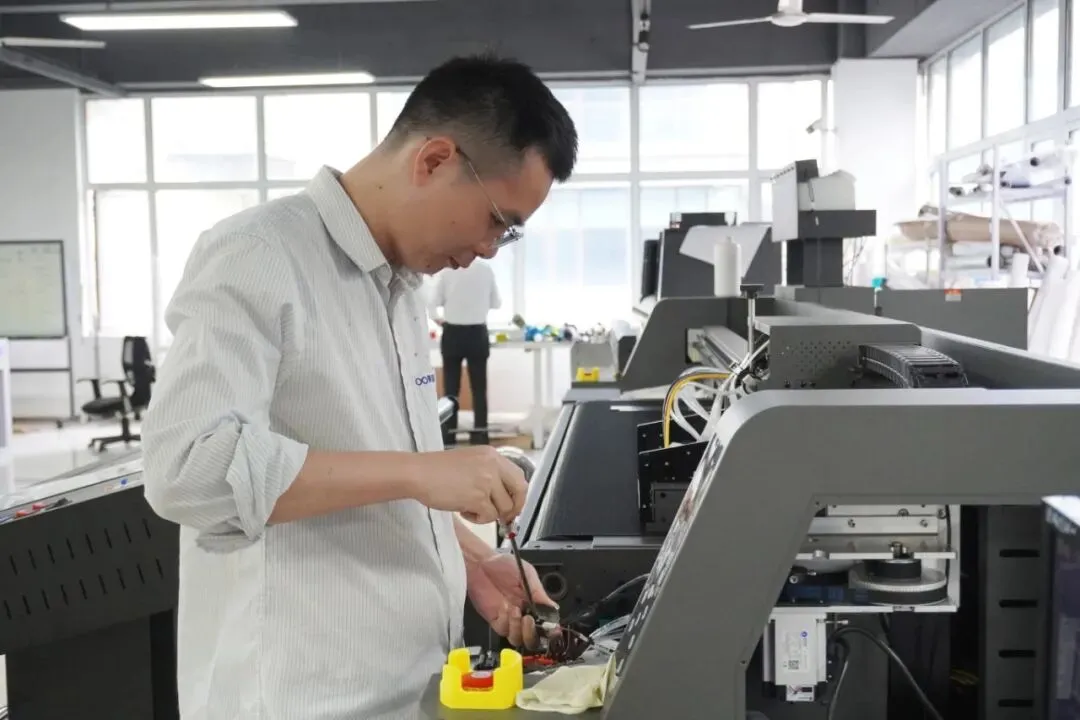
When comparing equipment suppliers, buyers often spend considerable time reviewing machine specifications but give less attention to technical support. This can become a serious issue when a machine stops during a busy production period.
A fault that is manageable during a quiet week can disrupt several orders when delivery deadlines are close. If the factory cannot diagnose the problem or obtain the necessary parts promptly, production may remain on hold longer than expected.
Technical assistance is also useful when operators need help adjusting settings, maintaining print quality, or introducing a new material.
What buyers should ask suppliers
Before placing an order, clarify how installation and operator training will be handled. Ask whether the supplier provides remote troubleshooting, how on-site service is arranged when necessary, and which maintenance tasks your team will be expected to perform.
Spare-parts availability deserves the same attention. Find out which components are commonly replaced, how they can be ordered, and what delivery arrangements apply. Actual lead times depend on the supplier's inventory and service policy, so these details should be confirmed rather than assumed.
If your factory expects to expand its product range, ask what technical support is available for future application testing and process adjustments.
It is better to establish the service scope, warranty terms, communication channels, and spare-parts arrangements before installation than to discover gaps after production has started.
A supplier's value should be assessed not only by the machine delivered, but also by the support available throughout its use.
A Final Check Before Placing Your Order
Before committing to a tablecloth printing machine, make sure you can answer these questions:
- Has the machine been tested with the materials used in your production?
- Does the proposed printing process meet the requirements of the finished product?
- Are the feeding, tension-control, and take-up systems suitable for the intended workload?
- Do you understand the conditions behind the stated print speed?
- Have auxiliary equipment, maintenance, and spare parts been included in your cost assessment?
- Are installation, training, troubleshooting, and warranty arrangements clearly defined?
If several of these points remain unclear, it is worth resolving them before signing the purchase agreement.
FAQ: Choosing a Tablecloth Printing Machine
1. What is the biggest mistake when buying a tablecloth printing machine?
Choosing equipment based on specifications or price without confirming that the complete printing process works with the intended material. Testing actual production samples helps identify potential problems before installation.
2. Should I test my fabric before purchasing a printer?
Yes. Testing the actual material helps evaluate color reproduction, detail, material handling, and the performance requirements of the finished product.
3. Does a higher print speed always mean higher productivity?
No. Actual output also depends on print mode, image coverage, material feeding, roll changes, process adjustments, finishing, and downtime.
4. What machine components should I check before buying?
Review the printhead configuration, effective print width, material-feeding mechanism, tension control, take-up system, and any auxiliary equipment required by the printing process.
5. Why does after-sales service matter for tablecloth printing?
Technical support helps operators troubleshoot faults, maintain consistent output, and adjust the process when production requirements change. Spare-parts availability can also affect how quickly equipment returns to operation.
6. What should I ask a tablecloth printer supplier before placing an order?
Ask about material testing, production performance, machine configuration, installation, training, warranty coverage, technical support, and spare-parts supply. Request clear answers based on your intended application.
Conclusion
Preparing for peak season involves more than adding another printer to the production floor. The equipment must work with your materials, match your production requirements, and be backed by support that your team can rely on.
Before making a decision, test the intended materials, review the complete machine configuration, and clarify the supplier's service arrangements. These checks can help reduce avoidable production problems and make equipment investment decisions more informed.
Baosiwei develops digital printing solutions for a range of industrial applications. If you are planning to expand your tablecloth printing capacity, contact our team with your material samples, product requirements, and expected production volume. We can discuss the printing process and equipment configuration suited to your application.
Website: https://www.baosiwei.com
Email: [email protected]